Indonesia is home to approximately 3.36 million hectares of mangrove forests, representing around 23% of the world’s total mangrove ecosystem. These forests are among the world’s most efficient natural carbon sinks, storing three to five times more carbon than terrestrial tropical forests.
Despite their immense ecological importance, mangrove forests across Indonesia continue to face pressure from land conversion – cleared for aquaculture ponds that support the cultivation of fish, shrimp, and crabs. While aquaculture provides vital livelihoods for many coastal communities, its expansion has become one of the coastal areas’ persistent issues, leading to mangrove loss. Economic opportunities have long encouraged this land-use change, particularly in communities that rely heavily on aquaculture for their livelihoods.
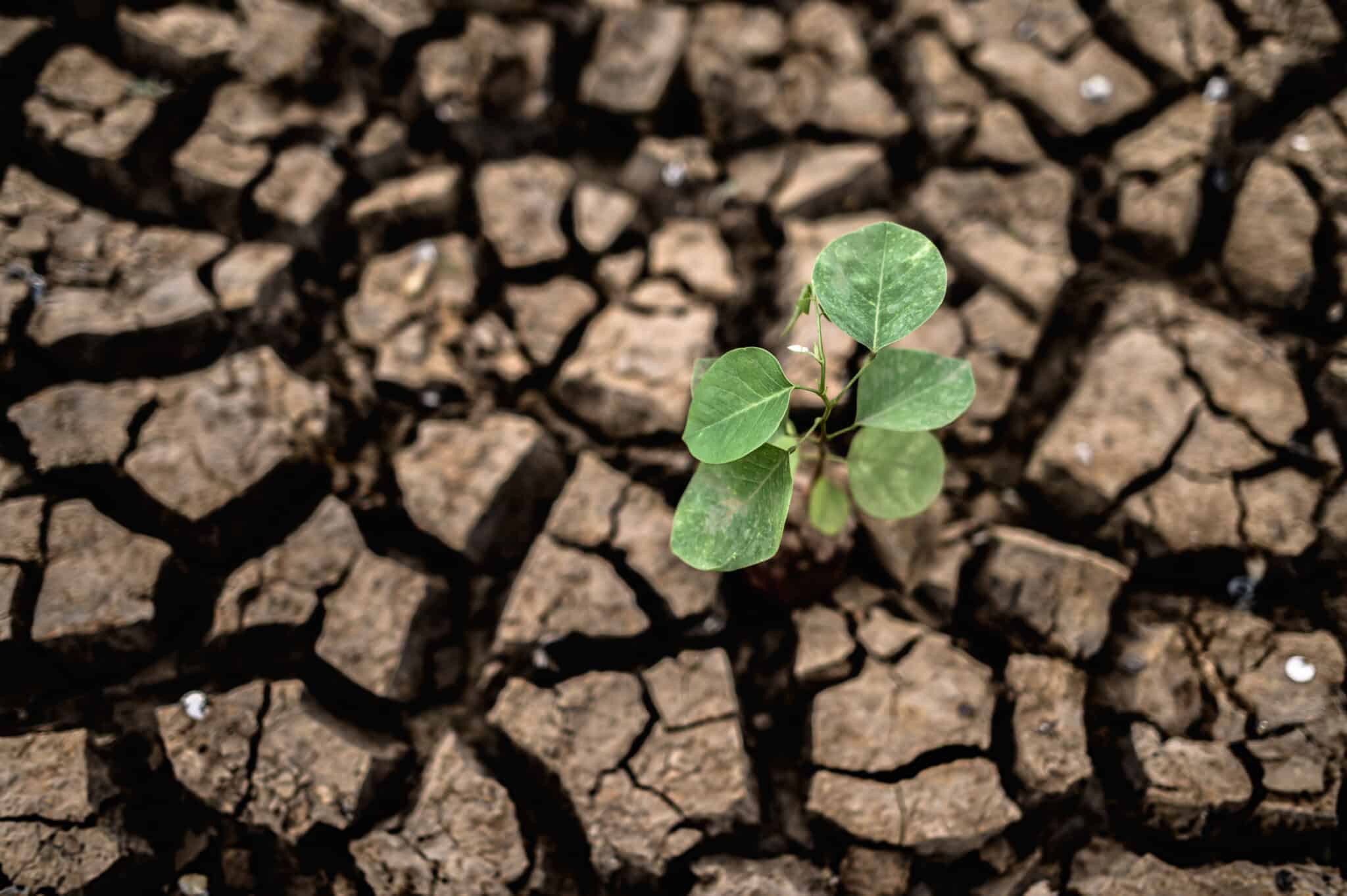
As mangrove forests disappear, coastlines become more vulnerable to erosion; fish and crustacean habitats decline, and the ecosystems’ capacity to store carbon is significantly reduced. Ironically, in many places, mangroves are disappearing not because they are dying naturally, but because they are being cleared and converted for aquaculture.
These challenges highlight the need for a more sustainable approach that balances environmental conservation with coastal livelihoods. Silvofishery offers one such solution by integrating mangrove restoration with sustainable aquaculture, enabling coastal communities to generate income while preserving the ecosystems on which they depend.
What is Silvofishery?
Silvofishery is an agroforestry-based practice that combines mangrove forests and aquaculture ponds, offering a nature-based solution to the degradation of coastal mangrove ecosystems. As mangrove loss continues to reduce fishery productivity and weaken coastal resilience, silvofishery provides a sustainable approach that restores ecosystems while creating livelihood opportunities for coastal communities.
Unlike conventional aquaculture, which requires clearing vegetation to create open ponds, silvofishery allows fish, mud crabs, or prawns to be cultivated in the same landscape where mangrove trees co-exist with ponds.
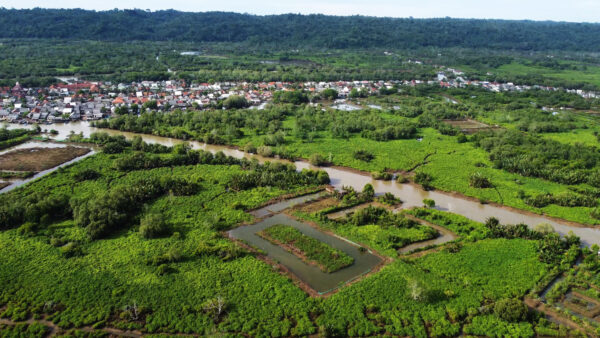
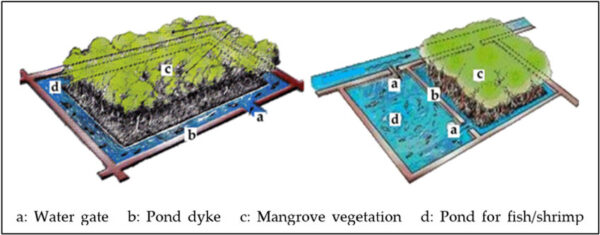
Two common designs have been widely adopted: the “empang parit” system, in which ponds are arranged around a central stand of mangroves, and the “komplangan” system, in which mangroves and aquaculture ponds are fully integrated within a single area. The mangrove species most commonly used in these systems include Rhizophora spp. and Avicennia spp. As they grow rapidly, thrive in varied coastal conditions, and produce propagules that are large and easy to collect, store, and plant.
Why Choose Silvofishery Over Conventional Aquaculture?
When mangrove forests are cleared, both coastal ecosystems and local communities bear the consequences. The loss of mangrove habitat reduces populations of fish and crustaceans, leading to declining fisheries that many households depend on for their livelihoods. At the same time, coastlines become more vulnerable to erosion and seawater intrusion, making access to clean freshwater increasingly difficult.
When they are replaced with conventional ponds, water quality deteriorates due to the accumulation of uneaten aquaculture feed and animal waste from the ponds. Without mangroves to naturally filter pollutants and decompose organic matters, resulting in poorer water conditions and less resilient coastal environments.
Compared with conventional aquaculture, silvofishery offers a wide range of ecological, economic, and social advantages. Beyond restoring coastal habitats, mangroves play a vital role in maintaining healthy pond ecosystems. Their root systems naturally filter 89.5–94% of nitrates, phosphates and suspended solids and also help break down pollutants like pesticides and hydrocarbons. These improve water quality, contributing to survival rates of 80.95-100% for mud crabs and black tiger shrimp. As a result, silvofishery provides more stable production than conventional aquaculture, which is more susceptible to disease outbreaks and fluctuating water quality.
Mangroves also enhance pond productivity by absorbing aquaculture waste and improving nutrient cycling. Research shows they can reduce ammonia (NH₃) concentrations by 79–83.4% via sedimentation and nutrient uptake. In addition, mangrove ecosystems support beneficial microbial communities that keep pathogenic Vibrio bacteria below critical levels, reducing the risk of disease-related crop failure. Together, these ecological functions make silvofishery a sustainable production system that delivers long-term environmental, economic, and social benefits. The integrated system also reduces production costs, as fish rely largely on natural food sources such as plankton and algae.
Trees4Trees’ Silvofishery Implementation in Kampung Laut
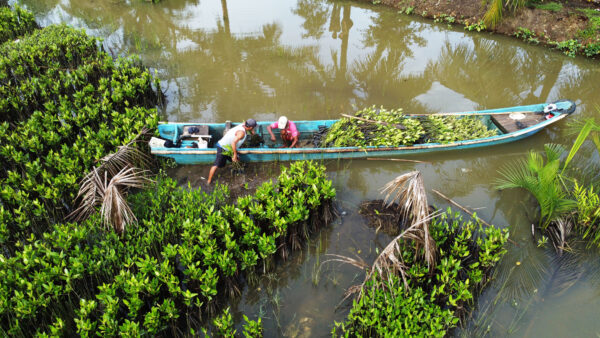
Since 2024, Trees4Trees has been working together with its partner, EcoMatcher, to restore degraded mangrove forests in Kampung Laut, a lagoon district in Cilacap Regency the southwestern coastal area of Central Java. Along with mangrove planting initiatives, a silvofishery system has been developed by combining mangrove conservation with sustainable aquaculture through fish and mud crab cultivation.
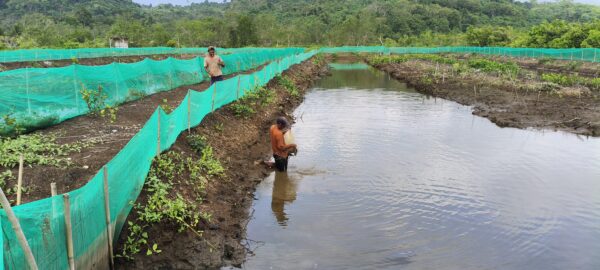
Within just six months, the ponds have begun to show promising results, with mud crab harvests reaching 7–10 kg per cycle. It sold at IDR 160,000 per kilogram, providing additional household income. For many families, the ponds are beyond an aquaculture project; they represent a financial safety net during periods when fishing is less productive.
Local fisher Surip explained that this can become his alternative income when he cannot go fishing. Another fisher, Kubi, said building the ponds was not easy, but the first harvest made all effort worthwhile. Together with other local community members, he harvested 7–9 kilograms after six months of cultivation. As mangroves continue to grow, he believes they will naturally protect their ponds and provide them with better livelihoods.
How Silvofishery in Kampung Laut Restores Mangroves and Revives Fisheries?
Read more: Silvofishery in Kampung Laut: Restoring Mangroves, Reviving Fisheries
Building a More Resilient Coastal Future
The experience in Kampung Laut shows that silvofishery is more than an aquaculture system. It is a nature-based solution that restores degraded mangrove forests while creating sustainable livelihood opportunities for coastal communities. By integrating ecosystem restoration with responsible aquaculture, silvofishery helps build healthier coastlines, stronger local economies, and greater resilience to future environmental challenges.
By supporting mangrove restoration and sustainable approaches such as silvofishery, we can help ensure that nature and coastal communities thrive together, bringing us one step closer to a healthier and more sustainable future.
Support our mangrove restoration HERE
Writer: Muhammad Dimas. Editor: V. Arnila Wulandani. Photos: M. Elly Nezar, Haryadi, Bengen (2000), Bagas Hanantiaka.