
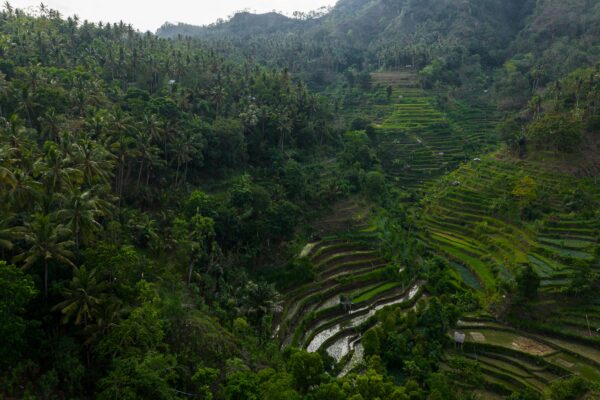
When you travel through farming areas, have you ever noticed fields or rice paddies that look like a giant flight of stairs climbing up the hillsides? They’re not built that way by accident. These are terraced fields, a simple yet effective farming conservation technique designed to help farmers protect their land from erosion.
Terracing is a soil and water conservation technique that creates a series of terrace platforms on sloping land, following contour lines of the landscape. This technique helps shorten slope length, reduce the effective slope gradient, slow surface water runoff, increase water infiltration, and reduce soil loss caused by erosion.
Rainwater is essential for life, but when it falls on exposed soil surfaces, it can cause erosion. The energy from the rainfall can cause parts of the soil to be carried to lower parts of the slope. Terracing is one of the conservation techniques to help this problem by slowing water flow, allowing more water to infiltrate the soil, and reducing the amount of soil carried away by runoff.
What Is Terracing?
Terracing transforms sloping farmlands into relatively flat platforms by cutting and filling soil along the natural contour lines. By breaking one long slope into several shorter section.
The terrace platforms also retain rainwater for longer, allowing more time for it to interact with the soil surface, seep into the ground, and increase water infiltration.
In land rehabilitation activities, terracing can also provide more stable growing spaces for plants. By improving the soil’s ability to retain water and reducing surface runoff, terraces provide better condition for plant survival, particularly during the early stages of growth.
Why Is Terracing Important?
Terracing works by changing the way water moves along sloping land. By temporarily retaining water on terrace platforms, terracing can slow down the surface runoff and soil carried downhill.
In Trees4Trees’ tree planting operations, particularly in the Citarum Watershed tree planting, terracing acts as a win-win solution with land managers and the environment. Armin Agung Mubarok, a Forestry and Environment Officer at Trees4Trees, explains that as part of conservation practices that help reduce the rate of erosion and sedimentation, terracing prevents nutrient-rich topsoil from being carried away by rainwater runoff or surface flow.
“By keeping soil and nutrients on the land rather than allowing them to be carried downslope into rivers, well-designed terraces can help control erosion, reduce sedimentation, and create better conditions for vegetation to grow.”
Different Slopes Different Type of Terrace
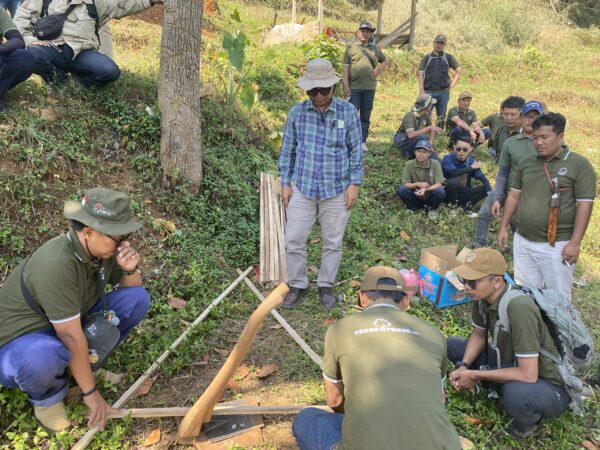
Terraces consist of several types that are effective for different slopes. Bench terraces, for example, transform slopes into several relatively flat or gently sloping cultivated areas, with risers between the terrace platforms. Garden terraces are a variation of bench terraces used on land with slopes of around 30–50%.
Selecting and applying the appropriate terracing technique requires careful consideration of the site’s biophysical conditions and intended land use. According to Armin, several factors need to be considered, including slope gradient, soil depth and texture, rainfall, rock conditions, slope stability, vegetation, land use, accessibility, and labor availability.
“Both bench and garden terraces are applied our Citarum watershed tree-planting project. Their use is supported not only by their familiarity among local communities and land managers, but also by their ability to shorten slope length, reduce the effective slope gradient, and slow surface runoff on sloping agricultural land,” he revealed.
Preparing Land for More Sustainable Rehabilitation
Beyond planting seedlings, the success of land rehabilitation is also determined by the condition of the land where the plants grow.
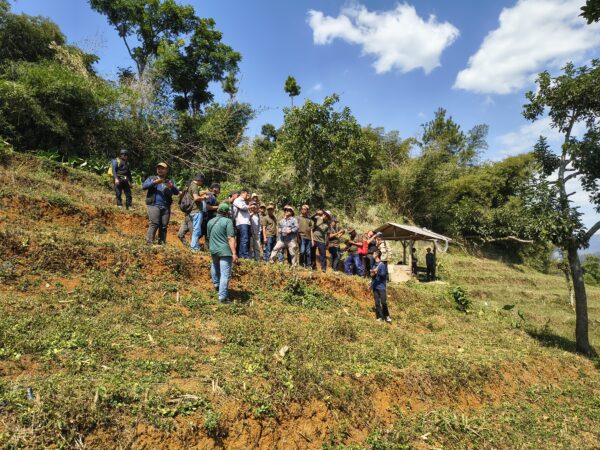
On sloping land, terracing helps create more supportive conditions by shortening slope length, slowing runoff, increasing infiltration, reducing erosion, and providing more stable growing spaces for plants.
However, these benefits can only be achieved when terraces are designed according to land conditions, properly constructed, equipped with safe drainage systems, reinforced with vegetation, and regularly maintained.
How Trees4Trees Prepares the Terracing for Land Rehabilitation
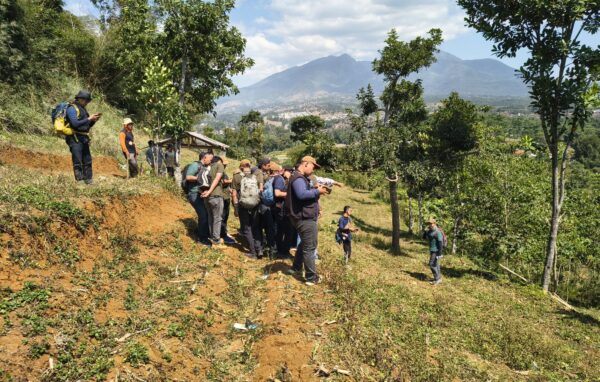
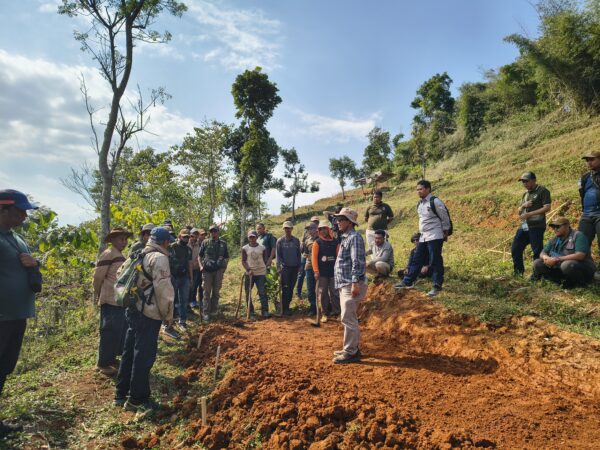
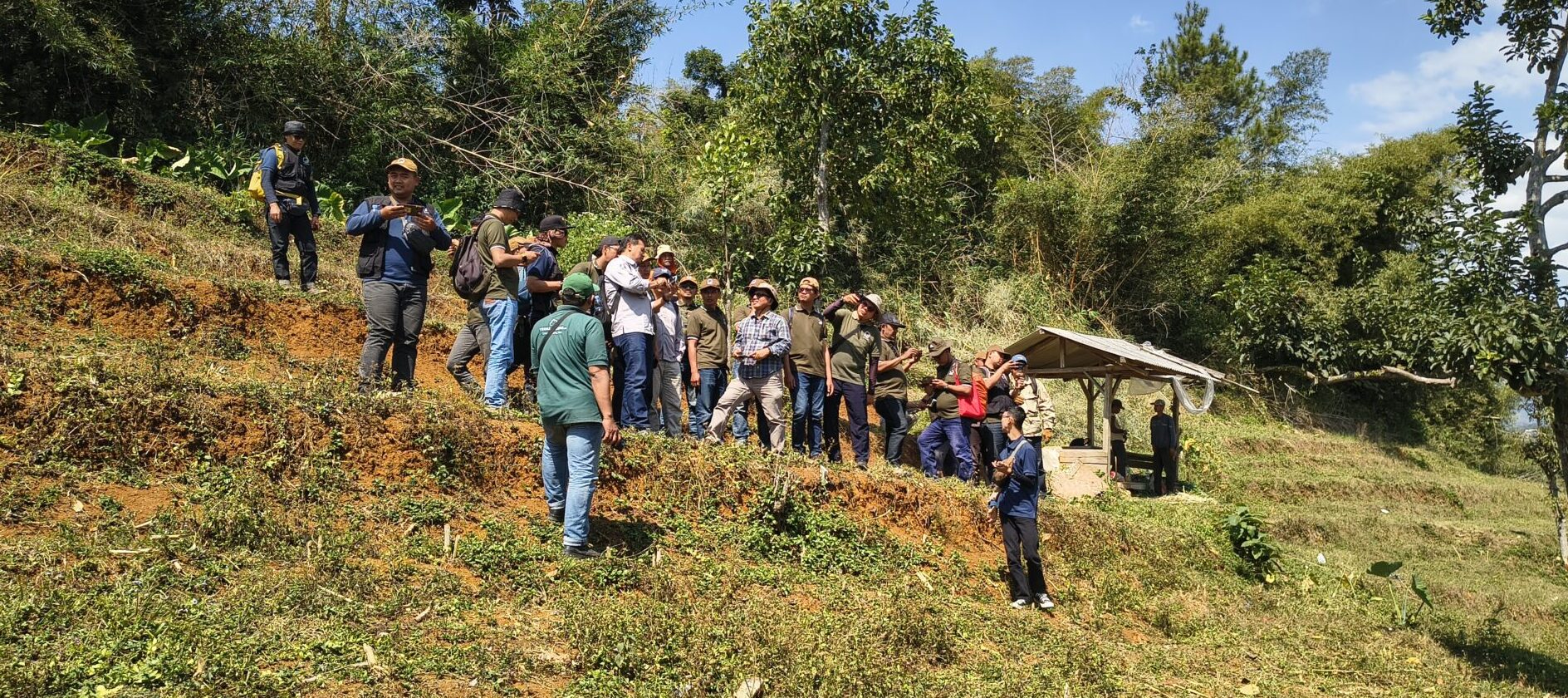
As part of the Training of Trainers (ToT), Trees4Trees collaborated with the National Research and Innovation Agency (BRIN) to provide trainers with practical training on terracing techniques. “This training is expected to strengthen our field team capacity to apply and share appropriate terracing practices with local farmers, supporting land rehabilitation efforts across the Citarum Watershed,” Armin said
He added that at Trees4Trees, land rehabilitation is supported not only through planting trees, but also practices that help prepare and protect the landscape where trees grow. Terracing is one example of how appropriate practices can become part of the rehabilitation process.
“Planting alone is not enough. Soil and water conservation techniques such as terracing are also crucial to reduce sedimentation and surface runoff and support the long-term hydrological function of the Citarum watershed.” Armin continued.
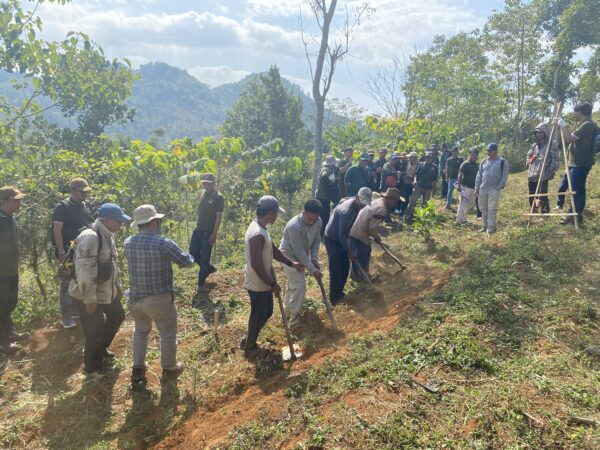
Terracing, therefore, is more than reshaping a slope into a series of steps. It is a way of managing soil and water so that landscapes can remain productive, more stable, and better able to support long-term land rehabilitation.
Writer: Muhammad Dimas. Editor: V. Arnila Wulandani. Photo: Rulli Ahmad Awalludin, Aji Santoso, Rizky Pradhitya. Yulianisa Dessenita.
X



X
X
No comment yet, add your voice below!