Located at the very northwestern tip of Bali, Jembrana Regency is an area that’s long been synonymous with cacao production. Beans from this area are famed for their high quality, rich aroma, and distinctive flavor; many are shipped to premium markets all over the world, including France, Switzerland, and Japan.
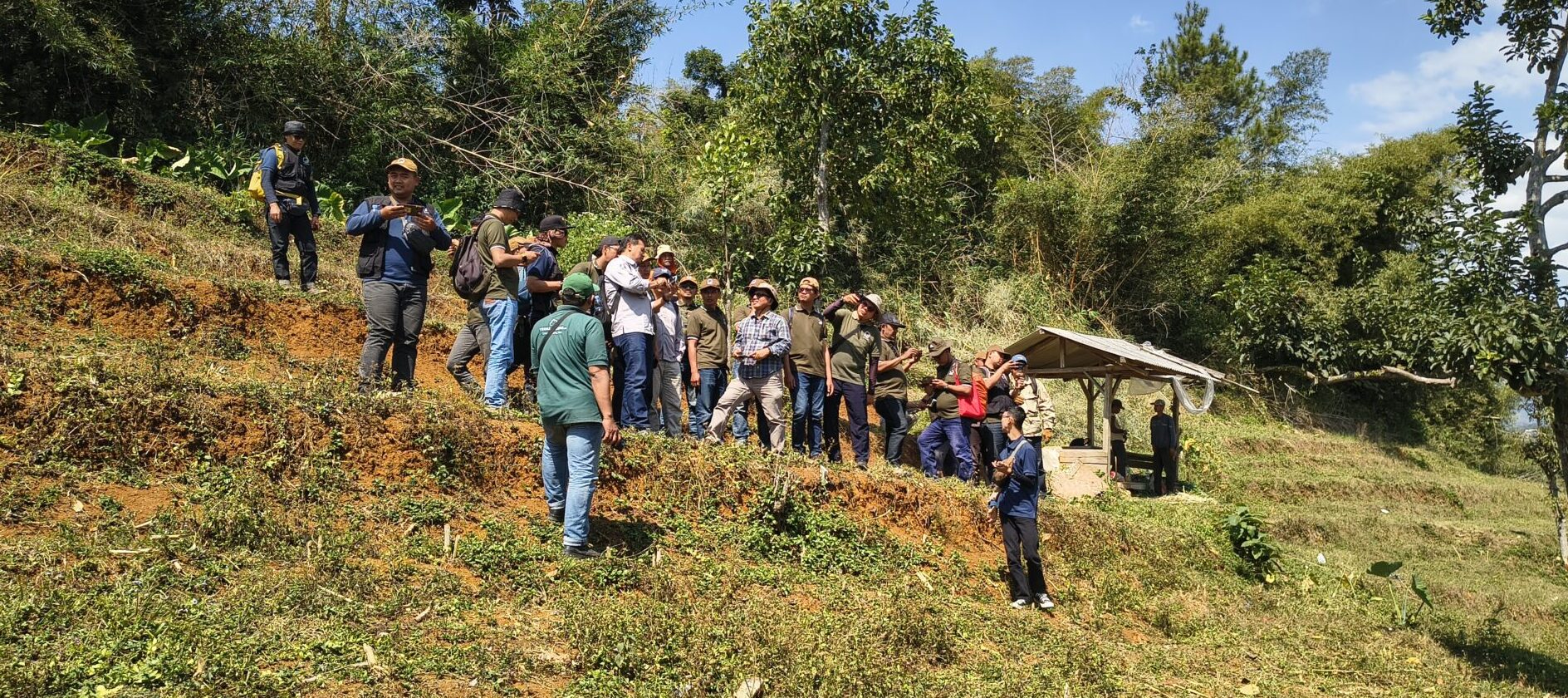
Jembrana produced 3,259 tons of cacao in 2024 – the highest output of any regency in Bali – and is home to 30 villages comprising around 6,000 hectares of cocoa plantations. Two of these villages, called Ekasari and Candikusuma, can be found in Melaya district. And both are the focus of a new planting program created by Trees4Trees and Reforest.
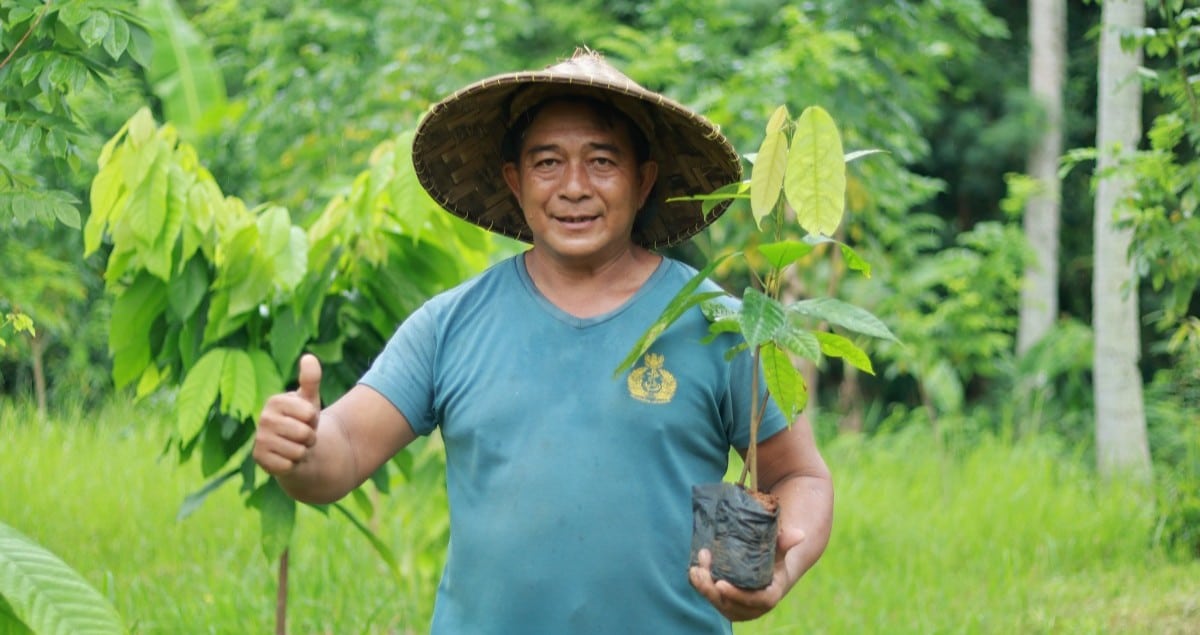
That same year, the community of cacao farmers in Jembrana welcomed a new member, when a recently retired naval military officer from Ekasari Village, named I Nyoman Sugiharta, swapped the high seas for cacao seeds, and decided to live out the remainder of his days working the land where he was born.
A Voyage of Discovery
After 31 years of service in the Indonesian Naval Military, Nyoman chose to return to Ekasari Village, and begin his new journey as a cacao farmer. “Not many retired naval officers become farmers,” he admits, before adding that “most of my colleagues go on to work in the government sector after retirement; I might be the only one who chose farming!”
The seeds of Nyoman’s passion for farming were planted long before retirement, inspired by his hometown neighbors and their love of nature. Like many before him, he is committed to regreening his homeland through cultivation. “Before I started planting trees, this land was barren and abandoned, covered only with wild grass,” he recalls.
Nyoman is mostly self-taught. By quizzing his neighbors, searching for information on social media, and participating in Trees4Trees’ farmer training, he has learned how to enrich his soil with organic fertilizer made from readily available organic materials, like cow dung. In just 2 years, he has seen the land grow steadily more fertile over time.
“I believe in learning by doing,” he says, before adding that the key to growing cacao trees is “consistent care, with regular fertilizing and pest control.” Through patience and attention to detail, he is achieving impressive results. But, Nyoman’s motivation for farming goes beyond the harvest—it keeps him active and gives him a sense of purpose in his retirement years.
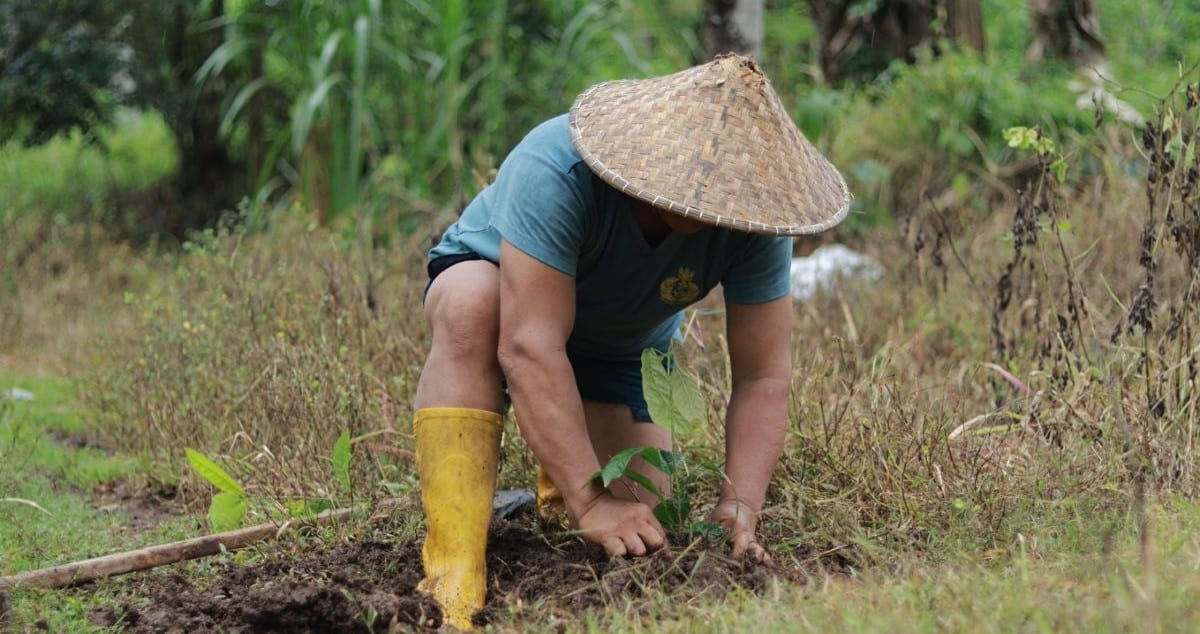
Nyoman plants a new cacao seedling on his plot of land in Ekasari Village, Jembrana Regency.
Ekasari Village: A Haven for Cacao Trees
“Cacao trees are well suited to the land in this village,” explains Nyoman, who chose cacao for this reason. He believes marketing is also pretty straightforward for cacao. “There is always demand,” he says, “and that is why most farmers here choose to plant it.” The trees typically bear fruit within three to four years, meaning farmers like Nyoman can see returns relatively quickly.
When he first started planting in 2024, Nyoman wasn’t alone. As a local member of the Reforest – Trees4Trees tree planting program, he received seedlings and has since nurtured them to maturity. “They have now grown to over 1.5 meters in height, with healthy green leaves,” he says proudly.
But cacao farming is not without its challenges. Nyoman reveals that water scarcity can be a major problem. “Our water supply here is very limited,” he says. “We rely on rainwater for watering our trees, so when the dry season arrives it becomes very difficult.”
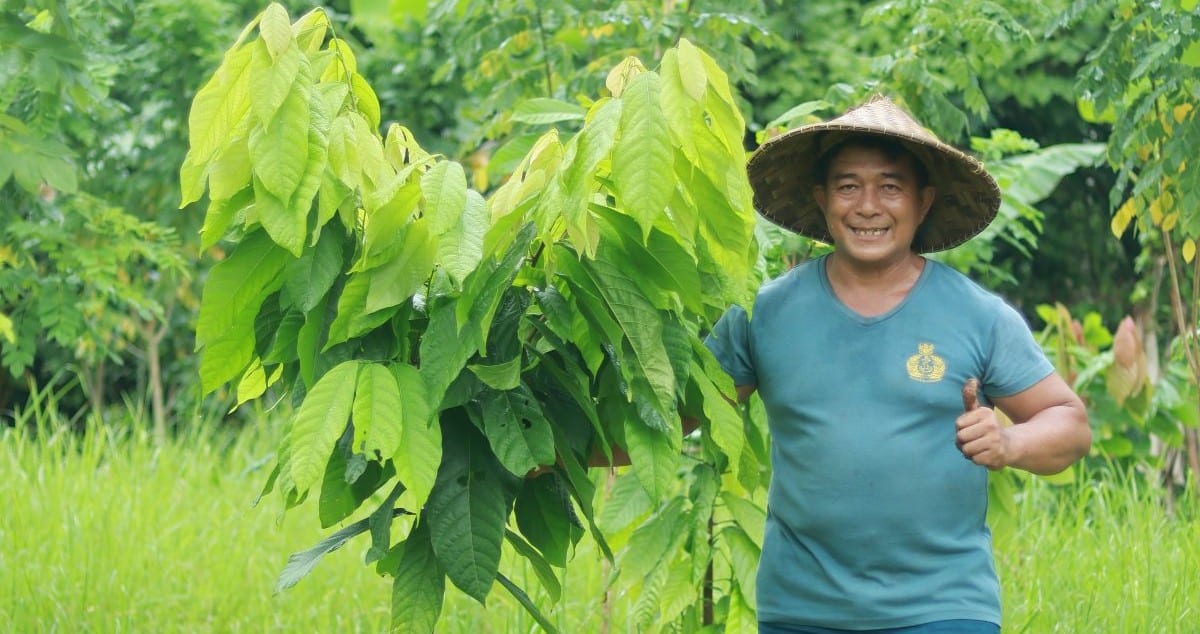
Nyoman’s cacao trees, which he received from Trees4Trees in 2024, now stand over 1.5 meters tall.
Finding Natural Solutions for Water Scarcity
Nyoman and his neighbors have built reservoirs to store rainwater during the dry season. But in recent times, even these reservoirs have begun to run dry, forcing the farmers to transport water from further away. Now, with support from Reforest and Trees4Trees, they are developing new solutions closer to home.
In agroforestry systems, trees act as natural water regulators by retaining soil moisture, reducing runoff, and protecting watersheds. Planting trees can thereby help farms to remain productive, even during dry periods. “I believe the long-term solution to address recurring water scarcity here is to plant more trees for water conservation,” says Nyoman. “But we need the right strategy, so the trees don’t hinder cacao growth,” he adds.
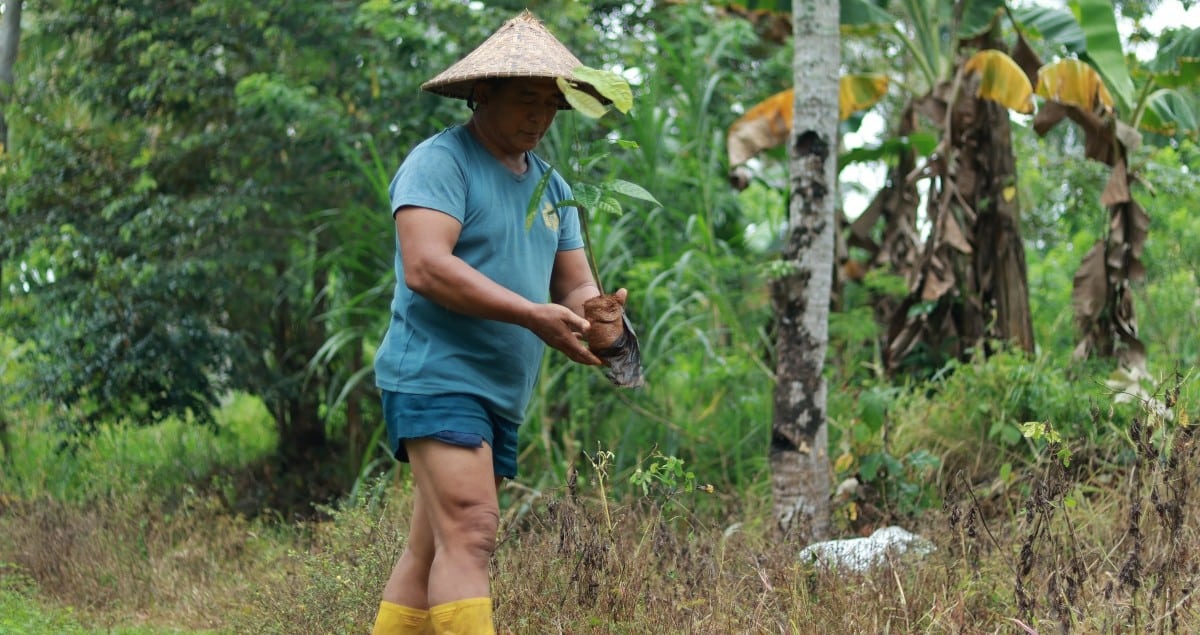
With support from Trees4Trees and Reforest, farmers like Nyoman are developing sustainable agricultural practices, finding solutions to water scarcity, and regreening the local landscape.
The tree–planting initiatives led by Reforest and Trees4Trees are helping Nyoman and his community to strike this balance and find solutions to the challenges they face. The program not only focuses on developing livelihoods by providing cacao seedlings, but also encourages members to actively participate in the long-term preservation of their environment.
For Nyoman, the benefits of this program are a mix of personal, professional, and principle. “I’m very thankful for this partnership,” he says, noting that it aligns perfectly with his retirement plan. “But most of all, I’m happy to contribute to my village, both economically and environmentally.”
Writer: V. Arnila Wulandani. Editor: Chris Alexander. Photos: Y. Dessenita
Get news, updates, & event info delivered right to your inbox :
*By completing this form you are are signing up to receive our emails and can unsubscribe at any time.
No comment yet, add your voice below!