
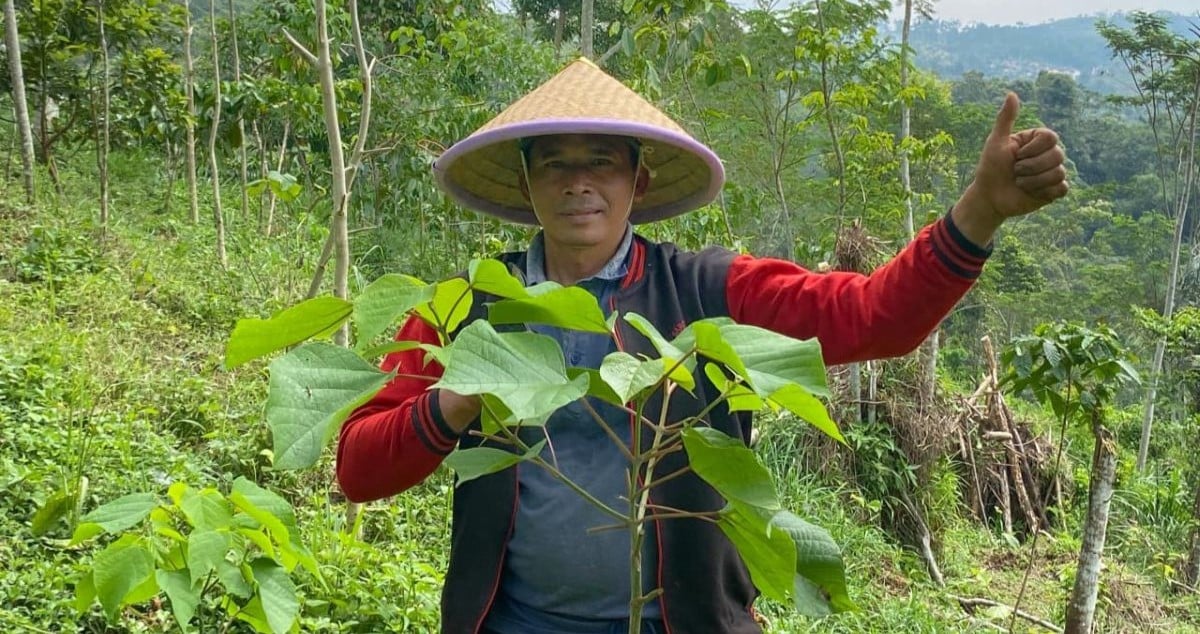
Guranteng Village lies in the upper reaches of the Citanduy Watershed, an important waterway in Tasikmalaya, West Java. Most residents of the region depend on farming for their livelihoods, with many growing vegetables in a monoculture system.
With hilly terrain and sun-drenched slopes, the village is an ideal place for growing crops, but this topography also poses a problem. Without sustainable land management, intensive farming has reduced the soil’s natural ability to retain water and withstand erosion. During heavy rainfall, increased runoff causes dangerous landslides, which deposit sedimentation into the river’s tributaries. These challenges are further exacerbated by the conversion of previously tree-covered land into housing developments.
Recognizing that these environmental challenges threaten both the landscape and local livelihoods, many community members have begun restoring their land through more sustainable farming practices. One of them is Dede Abdul Manan, a farmer who has been a member of the Reforest Australia and Trees4Trees tree-planting program since 2024.
The Roots of Restoration: Multi-cropping in Guranteng Village
Inspired by the success of his neighbors, Dede began farming vegetables in 2018, traveling from village to village in an open truck to sell his produce. “I planted whatever sold well,” he explains. “Back then, I grew only vegetables and sold them in villages across the district. I was able to make enough money to get by.”
Over time, however, Dede noticed that much of the land in his village was being cleared of trees and converted into vegetable fields or other monoculture farms. Concerned by the loss of tree cover, he began combining vegetable farming with agroforestry, planting coffee and avocado trees alongside his crops. Many farmers in the area have also found that integrating fruit trees with vegetables in this way provides greater economic benefits than growing vegetables alone.
“After trying it, coffee and avocado provided economic benefits beyond my expectations,” he says “Although they take a few years to mature, I can now sell dried coffee beans for around IDR 60,000 ($3.30) per kilogram and avocados for about IDR 10,000 ($0.55) per kilogram through online platforms. That’s much better than when I only grew vegetables.”
Nurturing New Growth: Support From Reforest Australia and Trees4Trees
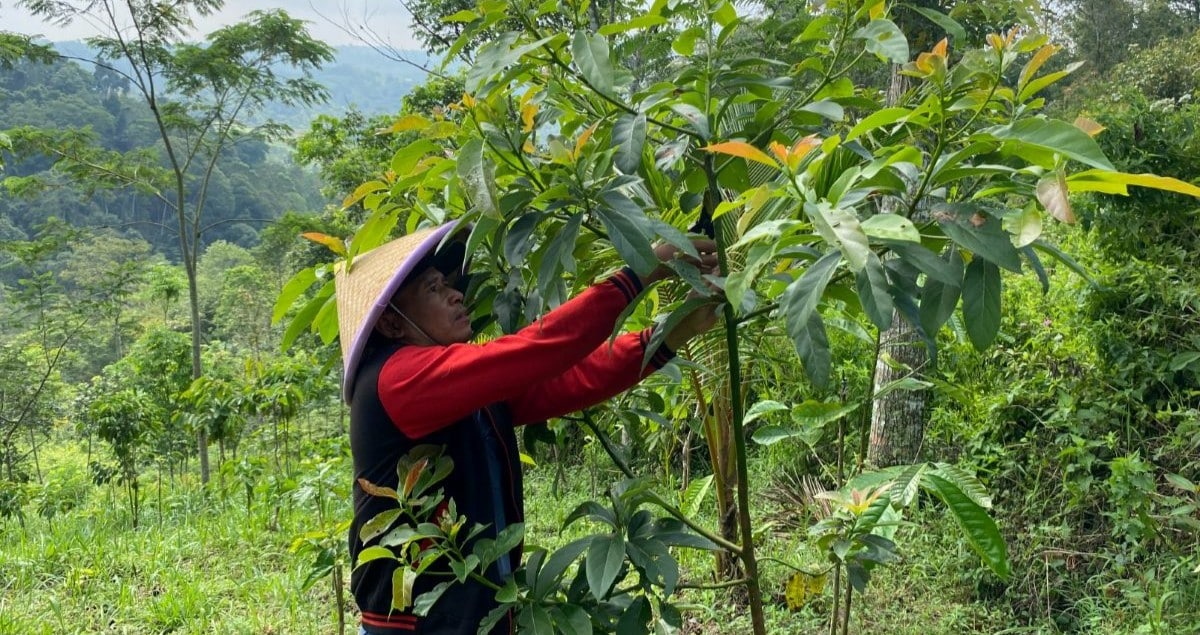
When the tree planting program initiated by Reforest Australia and Trees4Trees reached his village in 2024, Dede jumped at the opportunity to join. He received 190 avocado and 280 gmelina seedlings, then planted them across his sloping farmland by integrating them with vegetables and other crops.
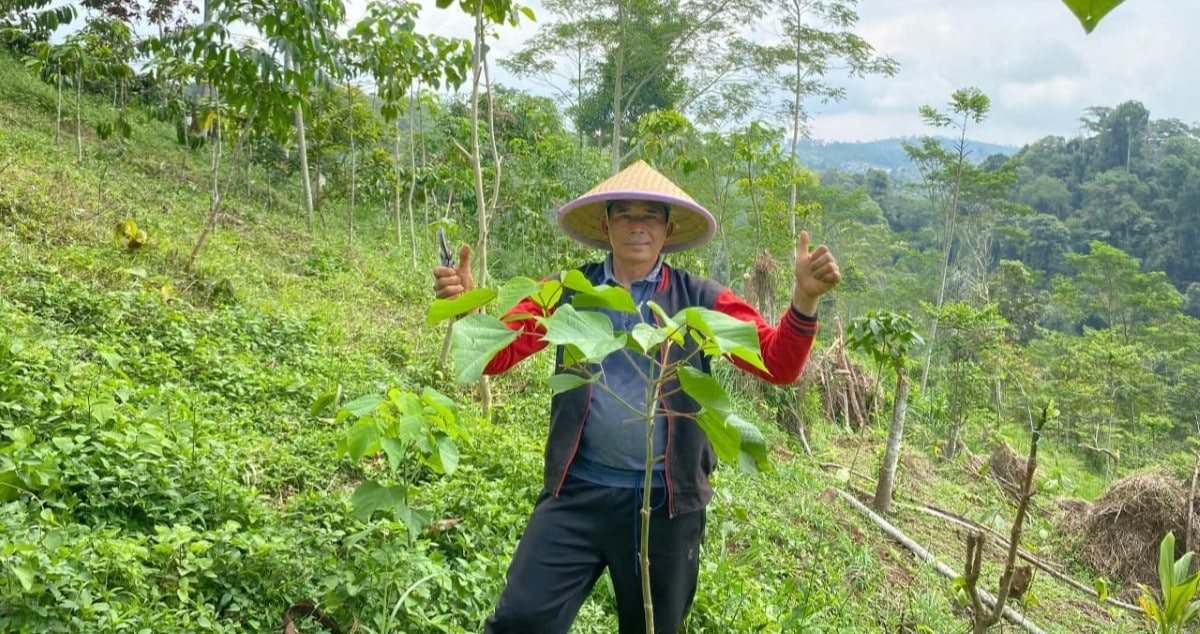
“Much of the land in this village has lost its tree cover,” he says, “and many farms are located on steep slopes; these trees allow us to restore unused sloping land, while continuing to grow vegetables and other crops.” Today, around 70% of the trees Dede has planted are thriving. After 2 years of careful nurturing, he says some of them have already reached up to two meters in height.
For Dede and other farmers in the village, the seedlings have strengthened the agroforestry system they had already started. “The program has really helped us,” he explains. “Land that was previously left open, especially on steep slopes, is now planted with trees; for me, the additional avocado trees will eventually provide another source of income—alongside the coffee and crops I already grow.,”
Restoring the Upper Citanduy Watershed
Over the years, Dede has witnessed growing environmental challenges in his village, such as logging and land conversion. “We’ve experienced plenty of landslides in the past,” he recalls.
Although there have been no major landslides in recent years, the threat remains.
Soil erosion continues to affect the village, particularly on its steep slopes. “Illegal logging has been one of the main causes of these environmental problems,” explains Dede, before adding that “many trees were cut down and never replanted.”
Guranteng Village forms part of a critical landscape that serves as a natural shield, regulating water flow, water quality, and soil health. For this reason, Dede believes returning tree cover to his village, is essential to restoring the upper Citanduy Watershed.
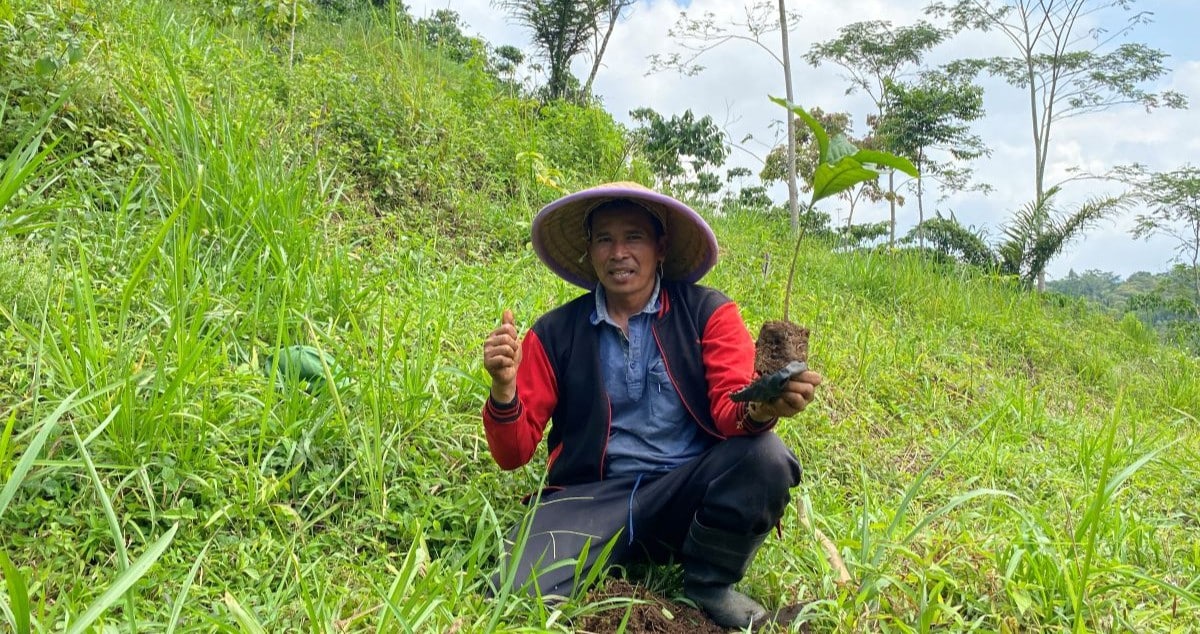
“Without tree cover upstream, the effects are felt not only by communities living there but also by those downstream,” he explains, adding that “erosion and siltation increase, and water availability can decline.”
For Dede, every tree planted represents more than just a source of income; each seedling is a source of pride, and a symbol of hope for the future. He is grateful for the seedlings provided through the tree-planting program, ands sees them as a worthy investment in both the environment and the future of his community.
As these trees mature, he hopes they will restore soil health, reduce erosion, protect water resources, and strengthen the resilience of the upper Citanduy Watershed, so this region can continue to provide his family with a safer home and a more secure livelihood in years to come.
Writer: V. Arnila Wulandani. Editor: Chris Alexander.
Photos: Alamsyah Bagaskara & Rizky.
X


X
X
No comment yet, add your voice below!