
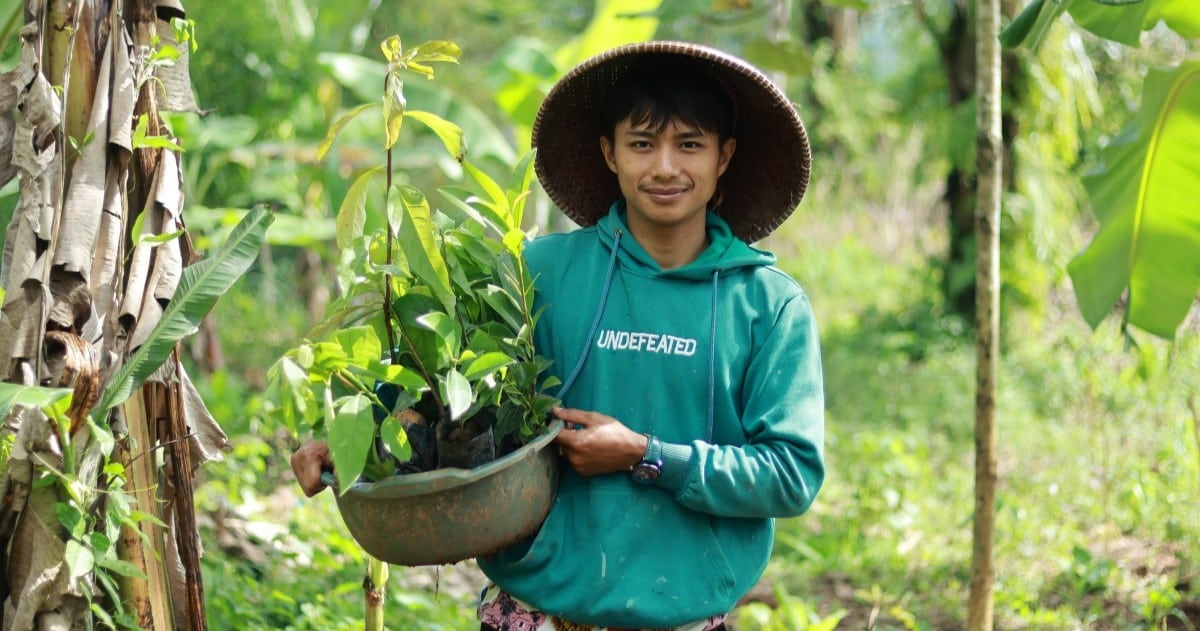
Agriculture in Indonesia has an age problem. In a digitally connected world, horizons are broadening and urbanization is on the rise; young people in rural areas are now more likely to build their careers in the city—as bankers, hotel workers, or office professionals—rather than working the land as their forebears did.
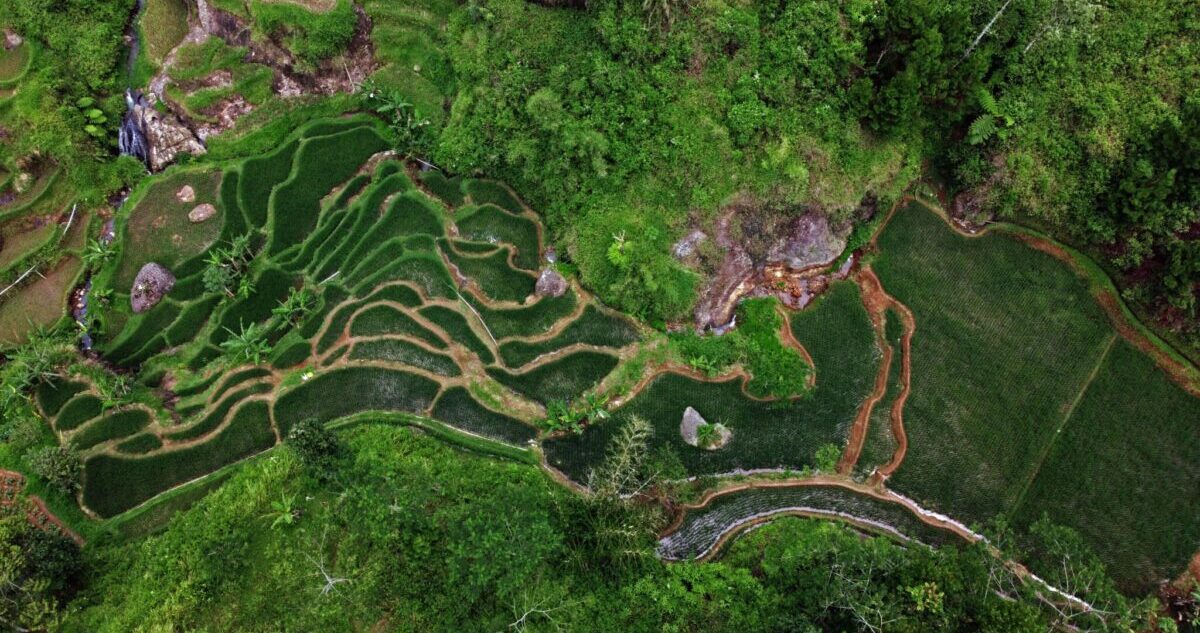
As the current generation of farmers grows older, fewer and fewer young recruits are stepping up to take their place. But in the village of Cibenda in West Bandung Regency, some young people are bucking the trend and walking a different path. Many have been disillusioned by city life and returned home to work the soil and make their living through farming – a way of life passed down by their ancestors.
In this article, we meet several members of this new generation, to uncover how and why they are returning to their roots.
Leaving the City for Farming
Many young people are attracted to the bright lights of city living out of necessity. There are simply more employment opportunities available in urban centers. Village life and livelihoods, by comparison, can seem relatively limited. However, many who migrate have found reality did not live up to expectations. That something fundamental was missing from their lives. A sense of community, a connection to nature, and free time.
“My salary was high, but I hardly had any time to enjoy what I earned,” explains Agung, a young farmer in Cibenda who recently spent 4 years working in a city hotel. Another young farmer, called Sanjaya, worked abroad. While working far from home, he missed his family and the green hills of his village. Now, since returning to Cibenda, he has planted fruit trees and vegetables, and sees their value beyond financial returns. “As the Sundanese elders say, “Koreh-koreh cok” – even though we’re only scratching a living, we are blessed,” Sanjaya said.
Another young farmer, Wawan, spent several years working as a bank officer in Bandung. “I’ve always been passionate about farming, and it kept drawing me back home,” he said. For Wawan, returning home was not only about pursuing what he loves. He also aims to help create stronger livelihood opportunities for the younger generation in his village.
Support From AstraZeneca and One Tree Planted
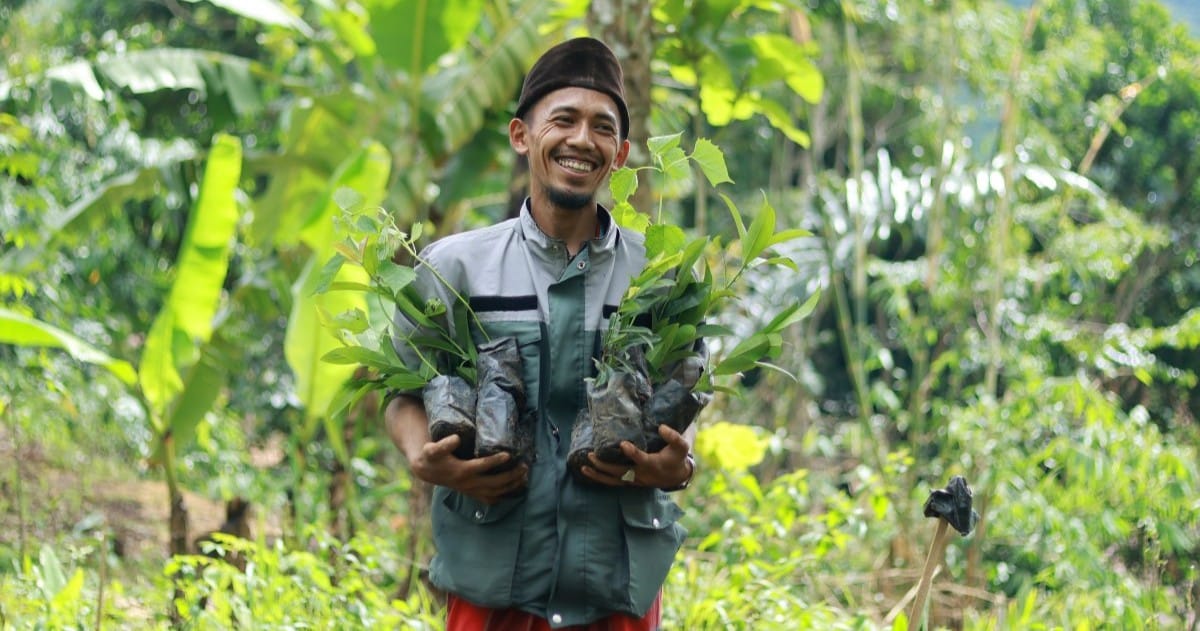
Many of these young farmers needed support to help get their fruit and vegetable agroforestry ventures off the ground. Help arrived in the form of a planting program from Trees4Trees, funded by AstraZeneca and supported by One Tree Planted.
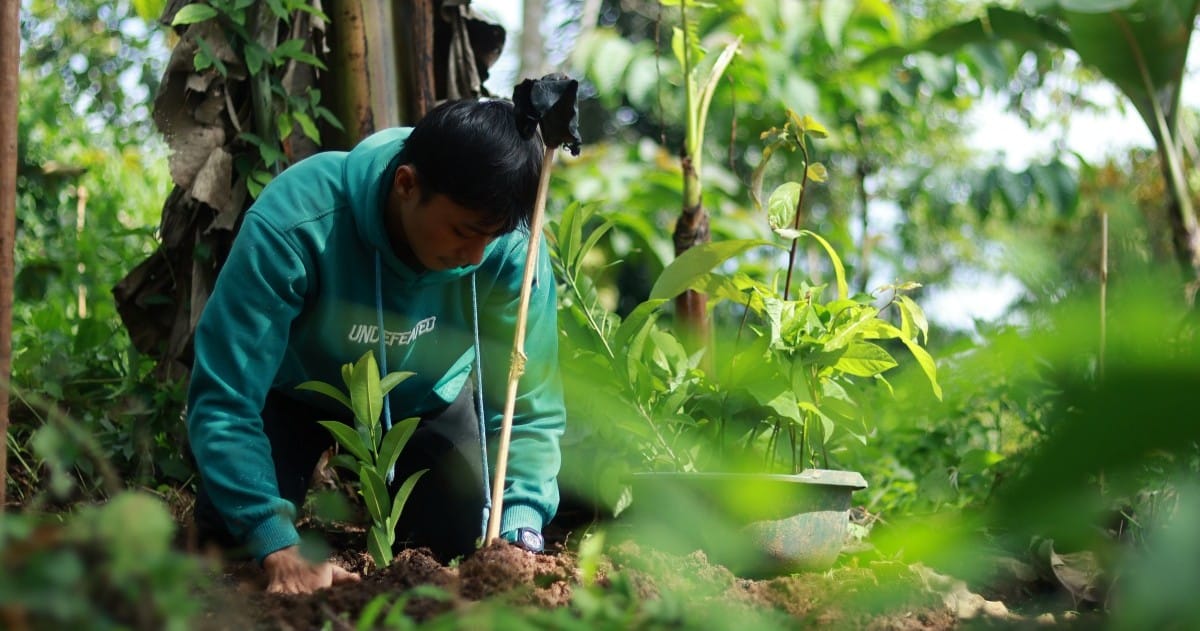
Young farmers like Wawan, Sanjaya and Agung were eager to join, and received seedlings of fruit trees like avocado, mango, nutmeg and durian, along with local vegetable staples like bitter beans (pete). The new crops were integrated into agroforestry, with timber trees like gmelina, cadamba and teak, along with rhizomes, tubers, and other vegetables.
“I chose nutmeg, as its fruits are widely used as sweets and spices,” explains Agung, who joined the program in its second year. “I also plant mango and bitter beans, because demand for them is always high.” Agung sees a clear benefit to partnership with the Trees4Trees planting initiative. “The seedlings were free and have really helped me to add more varieties of fruit trees that I plant on my land,” he says.
Traditional Livelihoods With a Modern Twist
Returning to the land does not necessarily mean rejecting the modern world. Young farmers are tech-savvy and regularly engage with digital platforms in their everyday lives. Now, these skills have become valuable marketing tools. Wawan, for example, uses online marketplaces to sell his produce.
“Most of the demand comes from these digital markets,” explains Wawan, who also notes that “rare fruits like kecapi, malaka or campoleh, and medicinal rhizomes like ginger, wild ginger, and turmeric are my best-selling products.” With new fruit trees planted through the program, Wawan has been able to diversify his produce in the field and is planning to enter new markets online.
Leading the Way: Planting the Seeds of a New Generation
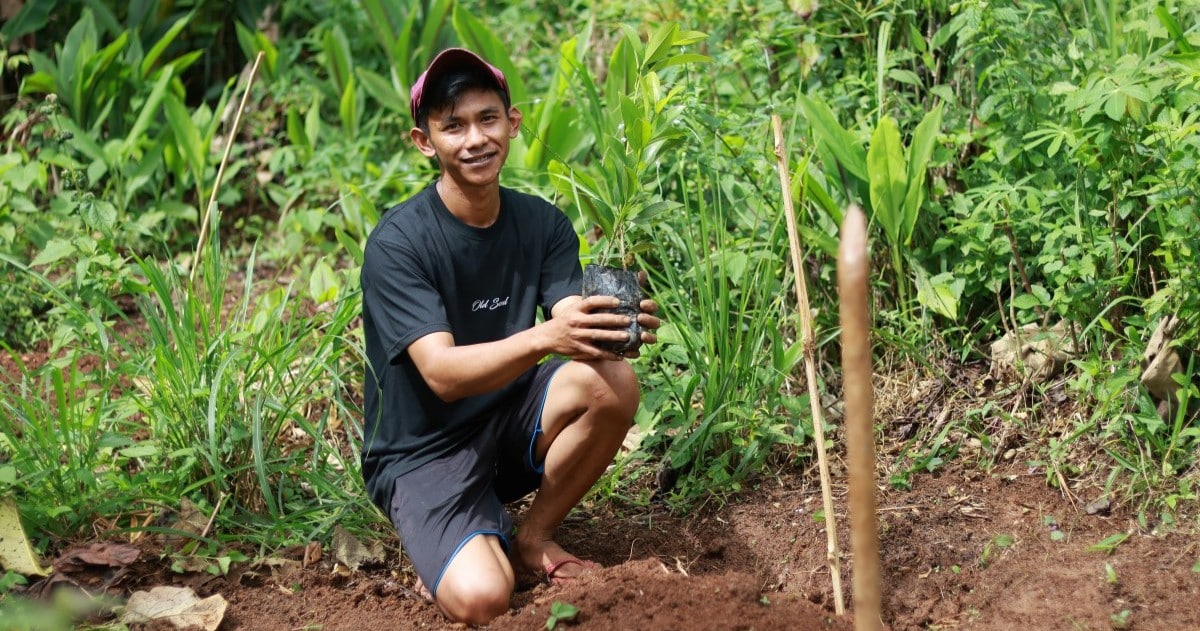
From landscape to livelihoods, young farmers in Cibenda are discovering the many benefits of returning to their roots. If farming is to have a future in West Java and elsewhere, young villagers will need to see a clear professional pathway. This means the creation of job opportunities; support, in the form of training, equipment and supplies; and compelling evidence that a young farmer can support their family by working the land.
The tree-planting program initiated by AstraZeneca, in collaboration with One Tree Planted and Trees4Trees, is helping to signpost this journey, bridging the agriculture age gap and reconnecting young farmers with their heritage. Crucially, this support does not represent a backwards step for ambitious young workers—by utilizing new technologies, modern agroforestry approaches and digital marketing strategies, a new generation of farmers is forging their own version of farming–a vision rooted in local knowledge, but focused firmly on the future.
With continued support, these young pioneers can become successful business owners and environmental stewards; reconnecting with their heritage, contributing to rural economic independence, and caring for nature.
Writer: V. Arnila Wulandani. Editor: Chris Alexander. Photos: Y. Dessenita.

X


X
X
No comment yet, add your voice below!