Skip to content

Mango

Mangifera indica

Mango

Mangifera indica

Mangifera indica, or the Mango tree, is a legendary tropical fruit tree known worldwide for producing the “King of Fruits.” Beyond its delicious harvest, it is a magnificent evergreen with a dense, spreading canopy that provides exceptional shade. It is a culturally and economically vital species in Indonesia, where it serves as a staple in home gardens and large-scale orchards, supporting both local food security and the agricultural economy.

Environmental Impact

Tree Usage

Scientific Name

Mangifera indica

International Name

Mango

Other Name

Mangga (Indonesia), Mamuang (Thailand), Aam (India)

Tree Family

Anacardiaceae (Sumac or Cashew family)

Status

Not Evaluated (Widely cultivated)

Carbon Sequestration

High; as a large, long-lived evergreen with a massive volume of biomass and a broad canopy, it is an excellent long-term carbon sink.

Native Distribution

Southern Asia (primarily India and Myanmar).

Characteristitc

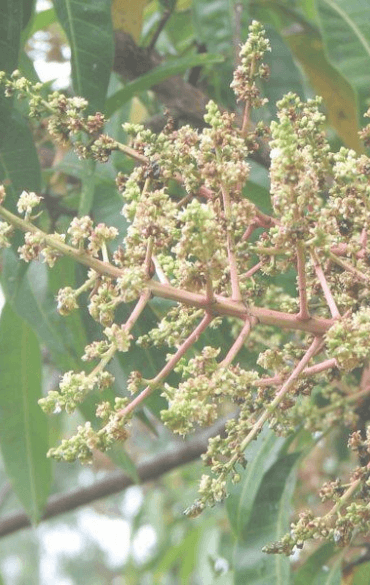
A large, rounded tree that can reach 15–30 meters in height. It has long, leathery, dark-green leaves and produces large clusters of small, fragrant flowers. The fruit is a fleshy drupe that varies greatly in size, shape, and color depending on the variety.

Habitat

Tropical and subtropical climates. It thrives in areas with a distinct dry season (which triggers flowering) and prefers deep, well-drained, fertile soil.

Shading & Cooling With its dense, umbrella-shaped canopy, the mango tree is one of the best tropical trees for reducing ambient temperatures. It provides significant cooling through both shade and transpiration, making it a favorite for residential gardens and urban spaces.
Air Quality Improvement The large surface area of its evergreen leaves is highly effective at trapping dust and absorbing atmospheric pollutants, contributing to cleaner air in both rural and semi-urban environments.
Soil Stabilitation The tree possesses a deep taproot and a wide-reaching lateral root system that anchors the soil effectively, preventing erosion during the heavy rains of the monsoon season.
Global Food Commodity

The primary value lies in its fruit, which is eaten fresh, dried, or processed into juices, jams, and pickles. In Indonesia, young mangoes are a key ingredient in Rujak (spicy fruit salad), while ripe ones are a major export.

Timber

Mango wood is a sustainable "by-product" of the fruit industry. Once a tree reaches the end of its productive fruit-bearing life (around 30–40 years), the wood is harvested for furniture, flooring, and decorative bowls. It is prized for its unique grain and "spalted" patterns.

Medicinal Properties

Various parts of the tree have traditional uses. The leaves are used in some cultures to manage blood pressure and respiratory issues, while the bark is used for its astringent properties to treat digestive ailments.

  1. Mango trees can be incredibly long-lived; some specimens in India are reported to be over 300 years old and still bearing fruit. 
  2. The mango is the national fruit of India, Pakistan, and the Philippines, and the national tree of Bangladesh. 
  3. A single mango tree can produce hundreds, or even thousands, of fruits in a single season. 
  4. The mango is related to cashews and pistachios—and more surprisingly, it is in the same family as poison ivy (though the fruit is perfectly safe for most people). 
  1. Indonesia is famous for its unique local varieties, particularly the Harum Manis from Probolinggo, East Java, which is highly sought after for its intense sweetness and “fragrant-sweet” aroma. 
  2. In Indonesian home culture, planting a mango tree in the front yard is often seen as a symbol of hospitality and prosperity, providing a gathering spot for neighbors to enjoy the shade. 
  3. Other popular Indonesian varieties include Mangga Gedong Gincu (known for its bright red/yellow skin) and Mangga Manalagi, a local favorite for its crunchiness and honey-like sweetness even when not fully ripe. 

Discover More Trees

Artocarpus heterophyllus
Mangifera indica
Arenga pinnata
X

Renewing the environment and empowering the local communities through the forestry and education

See your trees
X
X

Subscribe Now

Get the latest updates on our tree-planting journey – sent directly to your inbox. 

By completing this form, you agree to receive our emails. You can unsubscribe at any time. 

Subscribe Now

Get the latest updates on our tree-planting journey – sent directly to your inbox. 

By completing this form, you agree to receive our emails. You can unsubscribe at any time.