Gmelina (White Teak)
Gmelina arborea
Gmelina (White Teak)
Gmelina arborea
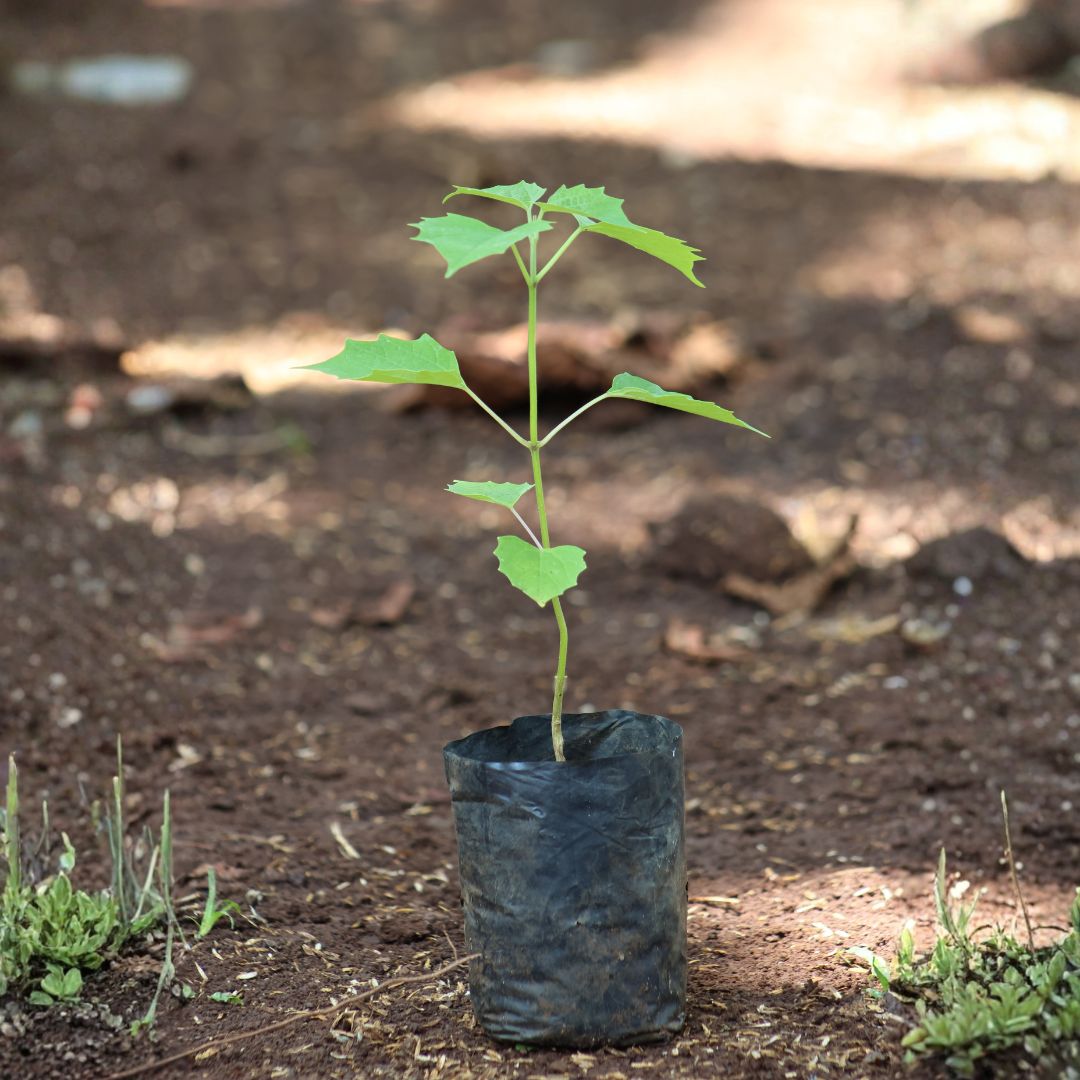
Gmelina arborea, commonly known as Beechwood or Gmelina, is a fast-growing deciduous tree highly valued in tropical forestry. Often referred to as a wonder tree due to its rapid growth and versatility, it produces high-quality, lightweight timber that is resistant to warping. It is widely used in reforestation programs and industrial plantations across Southeast Asia to provide a sustainable alternative to slow-growing hardwoods.
Environmental Impact
- ✔ Carbon Sequestration, Pioneer Species, Rapid Reforestation, Soil Improvement
Tree Usage
- Biodiversity Support, Economic
Gmelina arborea
Gmelina, White Teak, Beechwood
Gamhar (India), Jati Putih (Indonesia), Yemane
Lamiaceae (formerly Verbenaceae)
Not Evaluated
High; its rapid biomass accumulation during the first 10 years of growth allows it to absorb and store atmospheric CO2 much faster than many other hardwood species.
Southern Asia, from India and Myanmar to Thailand and Southern China.
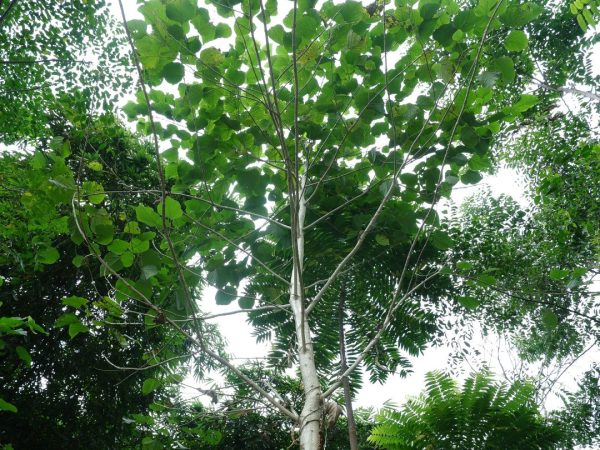
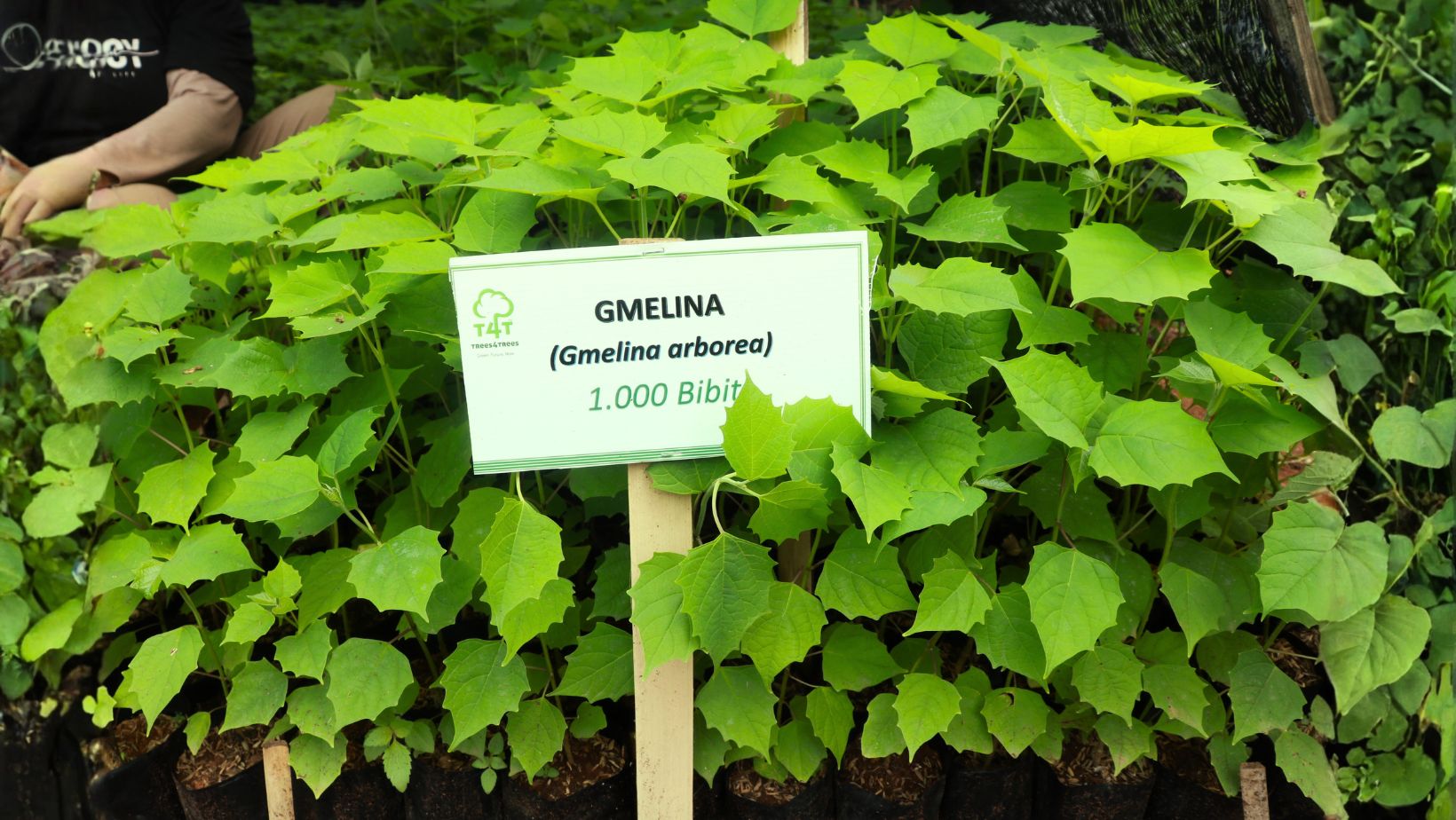
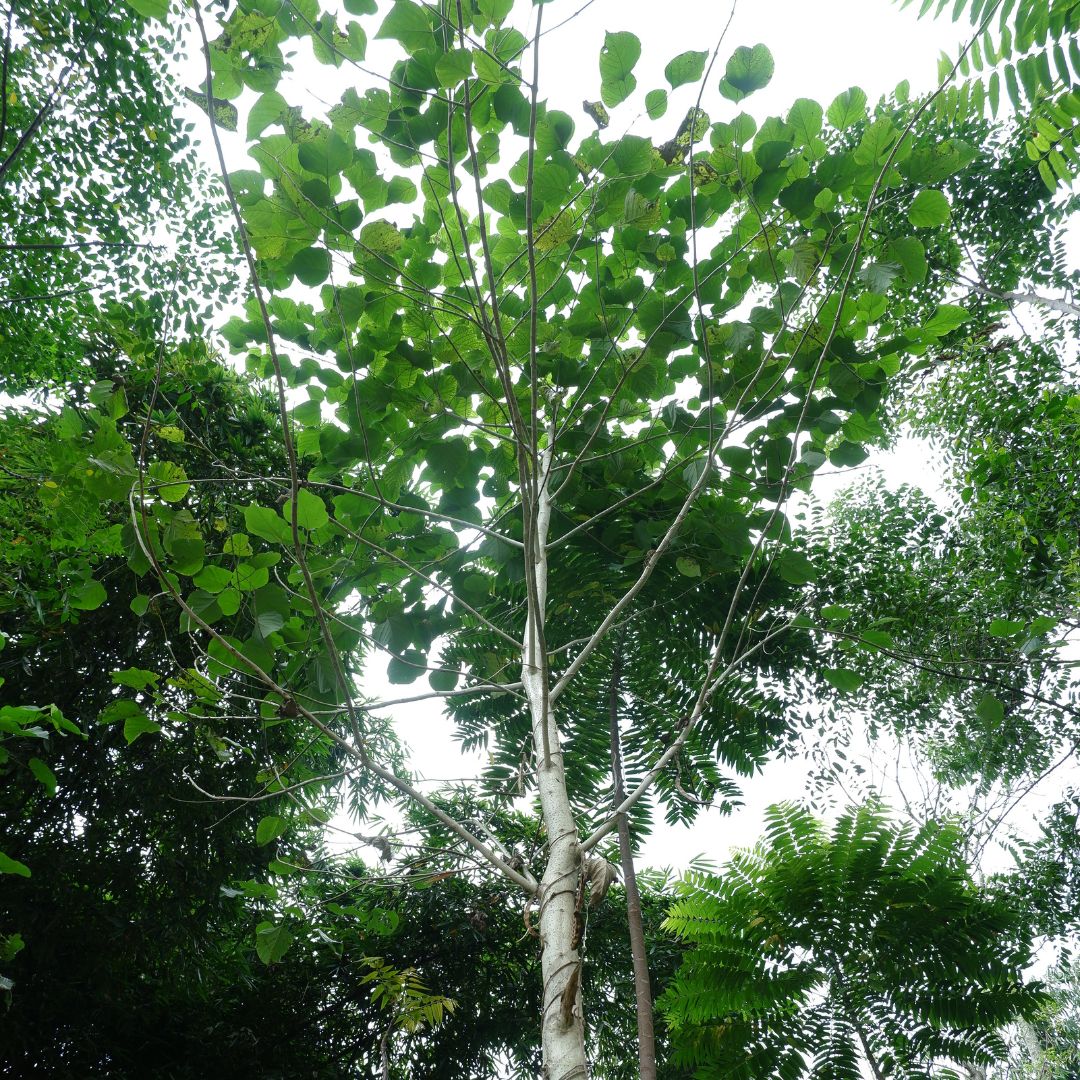
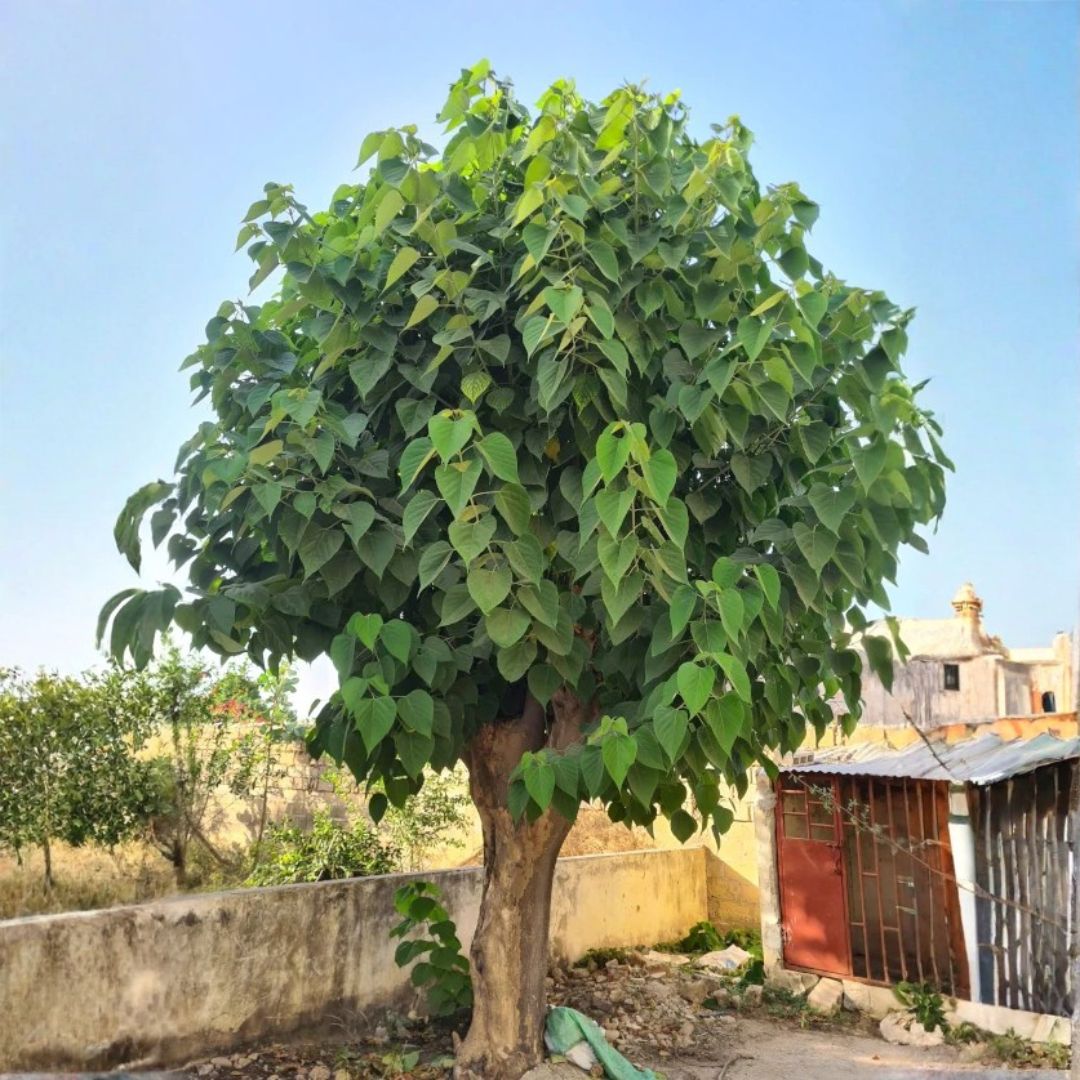
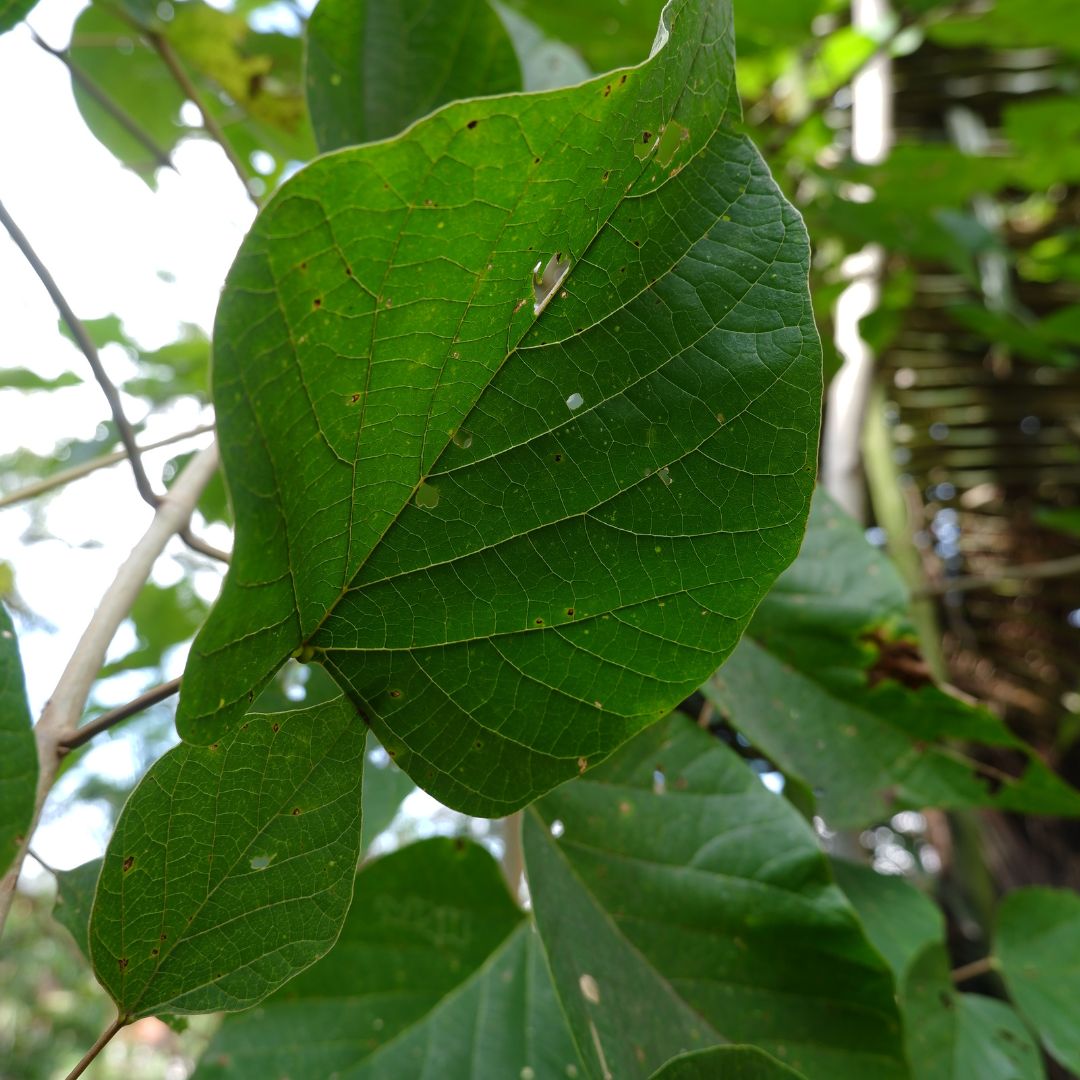
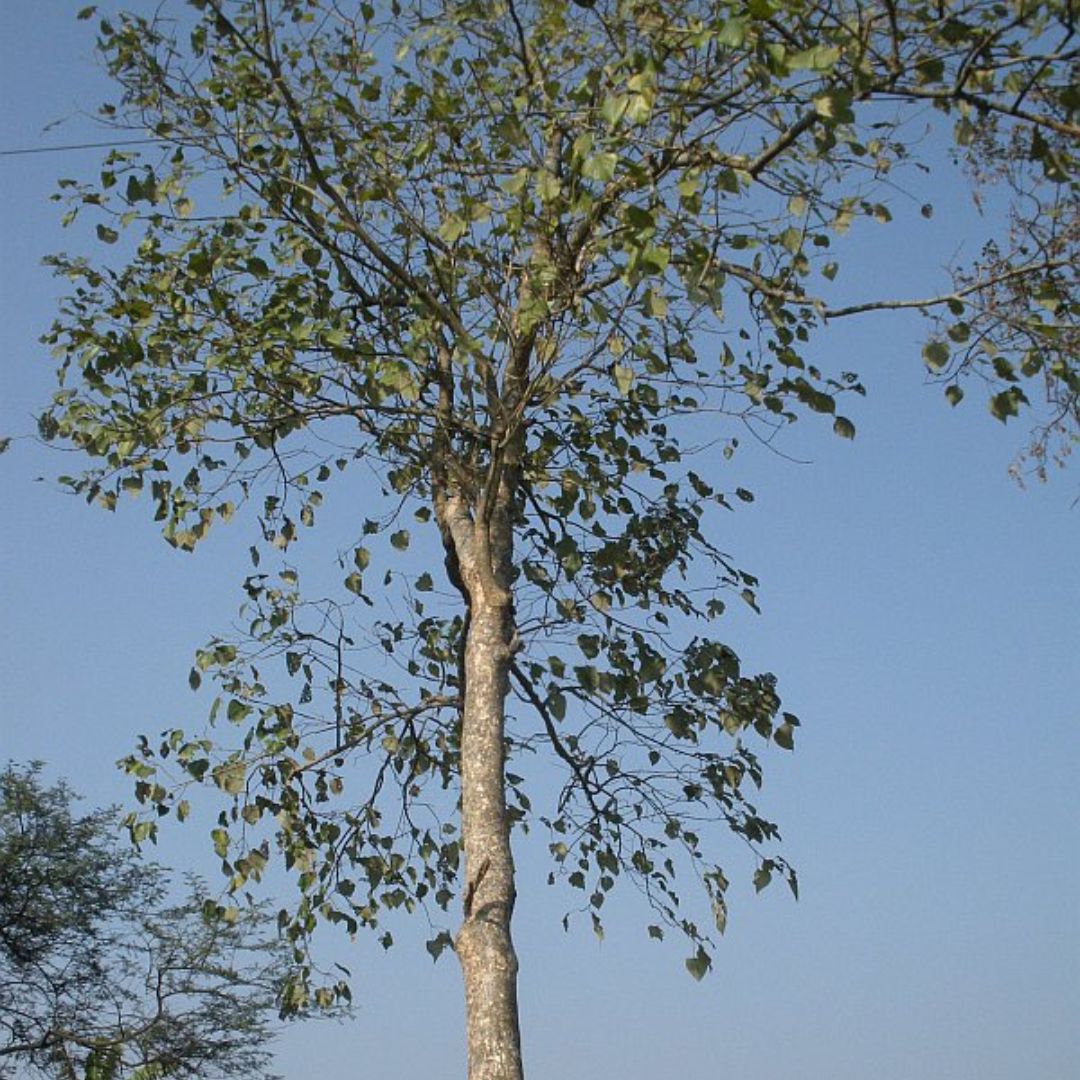
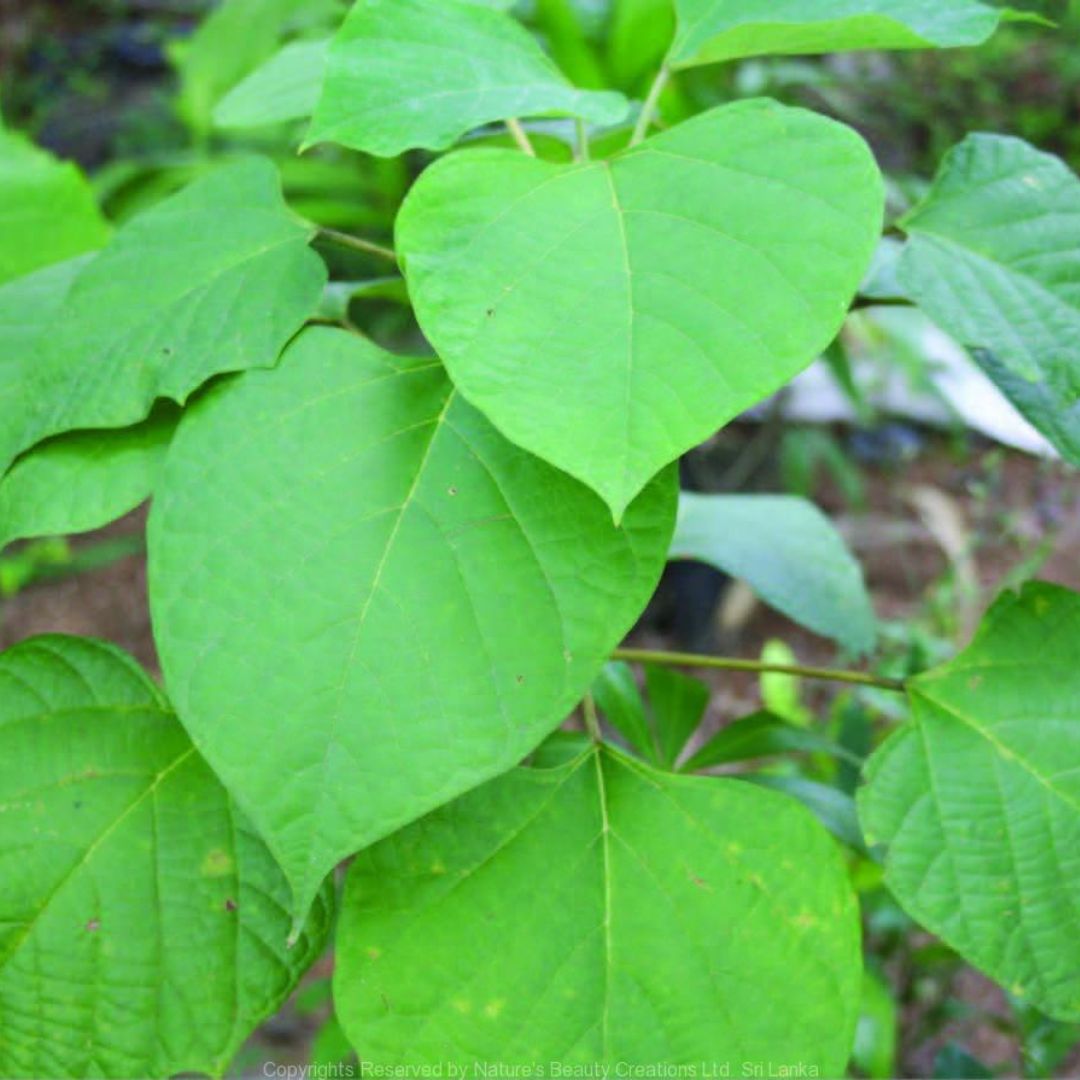
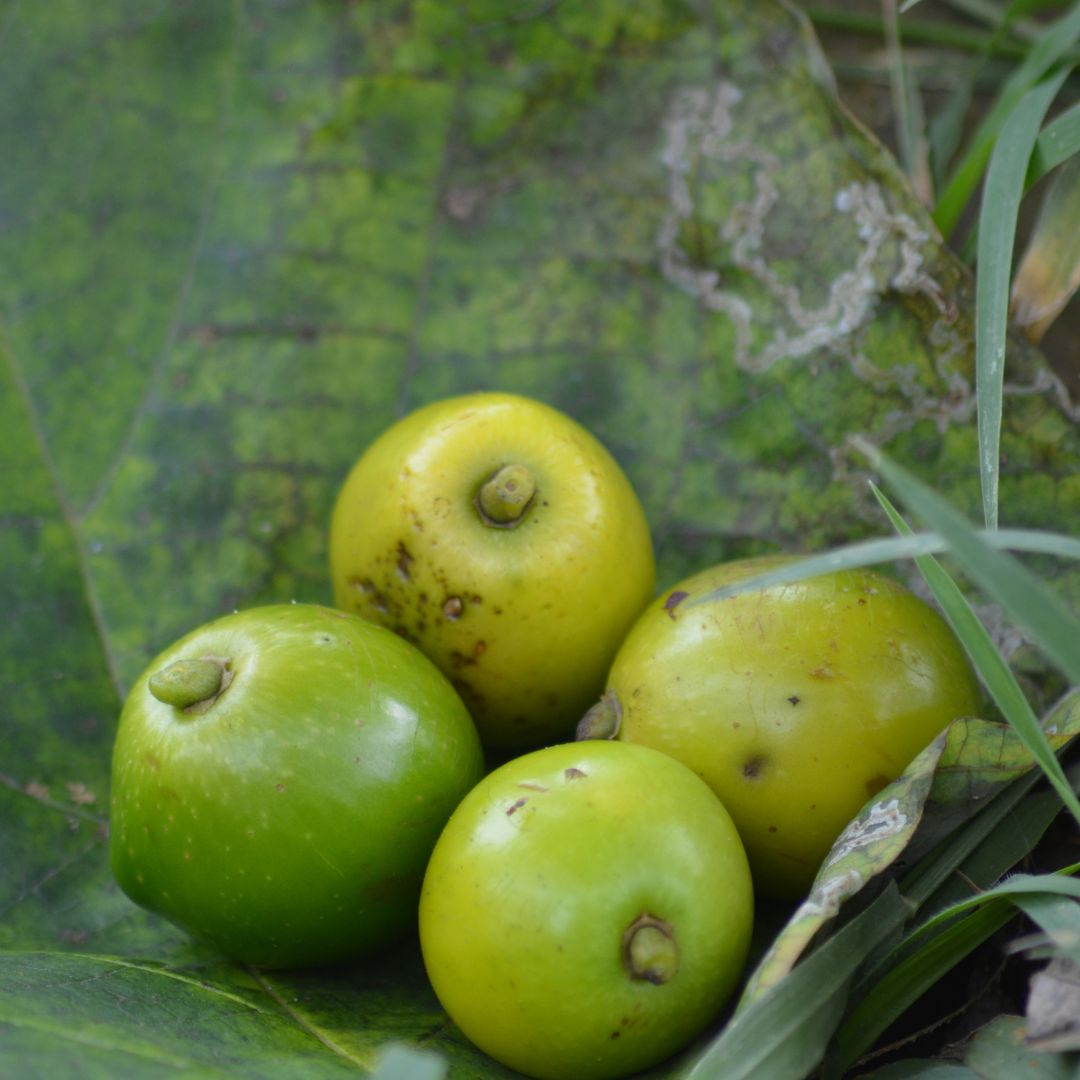
A medium-to-large tree reaching 30 meters. It has a smooth, light grey bark and large, heart-shaped leaves. It produces attractive trumpet-shaped flowers that are yellow or brownish in color, followed by yellow fleshy fruits.
Thrives in tropical and subtropical climates. It prefers moist, fertile, and well-drained soils but is remarkably resilient, capable of surviving in areas with poor soil quality or distinct dry seasons.

Known as White Teak, the wood is lightweight but surprisingly strong and durable. It is highly sought after for making high-quality plywood, furniture, musical instruments (like drums and guitars), and light construction.

The wood fibers are excellent for the pulp industry. Gmelina is a primary source for high-quality writing paper, tissues, and cardboard because of its high brightness and strength.

In traditional Ayurvedic medicine, various parts of the tree (roots, bark, and fruit) are used to treat a wide range of ailments, including fevers, digestive issues, and skin inflammation.
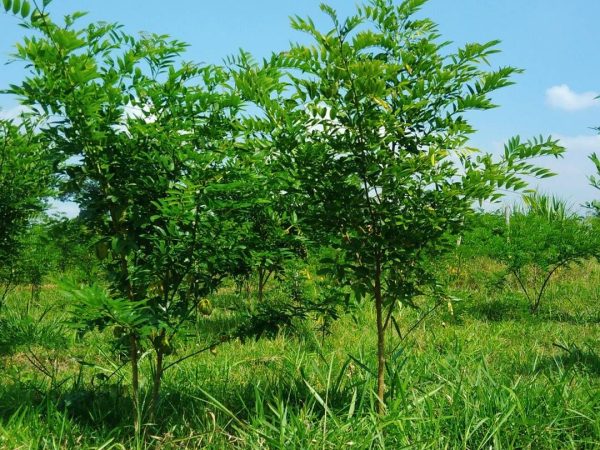
- Gmelina is one of the few tropical hardwoods that is naturally resistant to termites and rot, even without heavy chemical treatments.
- The tree is known for its self-pruning ability, where lower branches fall off naturally as it grows, resulting in a tall, straight, knot-free trunk.
- The flowers are rich in nectar and are highly attractive to honeybees, making the tree popular for silviculture-based honey production.
- Its wood is so stable that it is often used for making drawing boards and laboratory tables where precision and lack of warping are essential.
- In Indonesia, this tree is widely known as Jati Putih. It has become a favorite for community forests (Hutan Rakyat) across Java and Sumatra because it provides a living savings account for farmers due to its short harvest cycle.
- Local artisans in Southeast Asia often use Gmelina wood for traditional handicrafts and masks because the wood is easy to carve and holds intricate details without splitting.
Discover More Trees
See Your Trees-win
| Enter Your WIN |
Renewing the environment and empowering the local communities through the forestry and education
Visit Your Trees-text
| Enter Your WIN |
Renewing the environment and empowering the local communities through the forestry and education