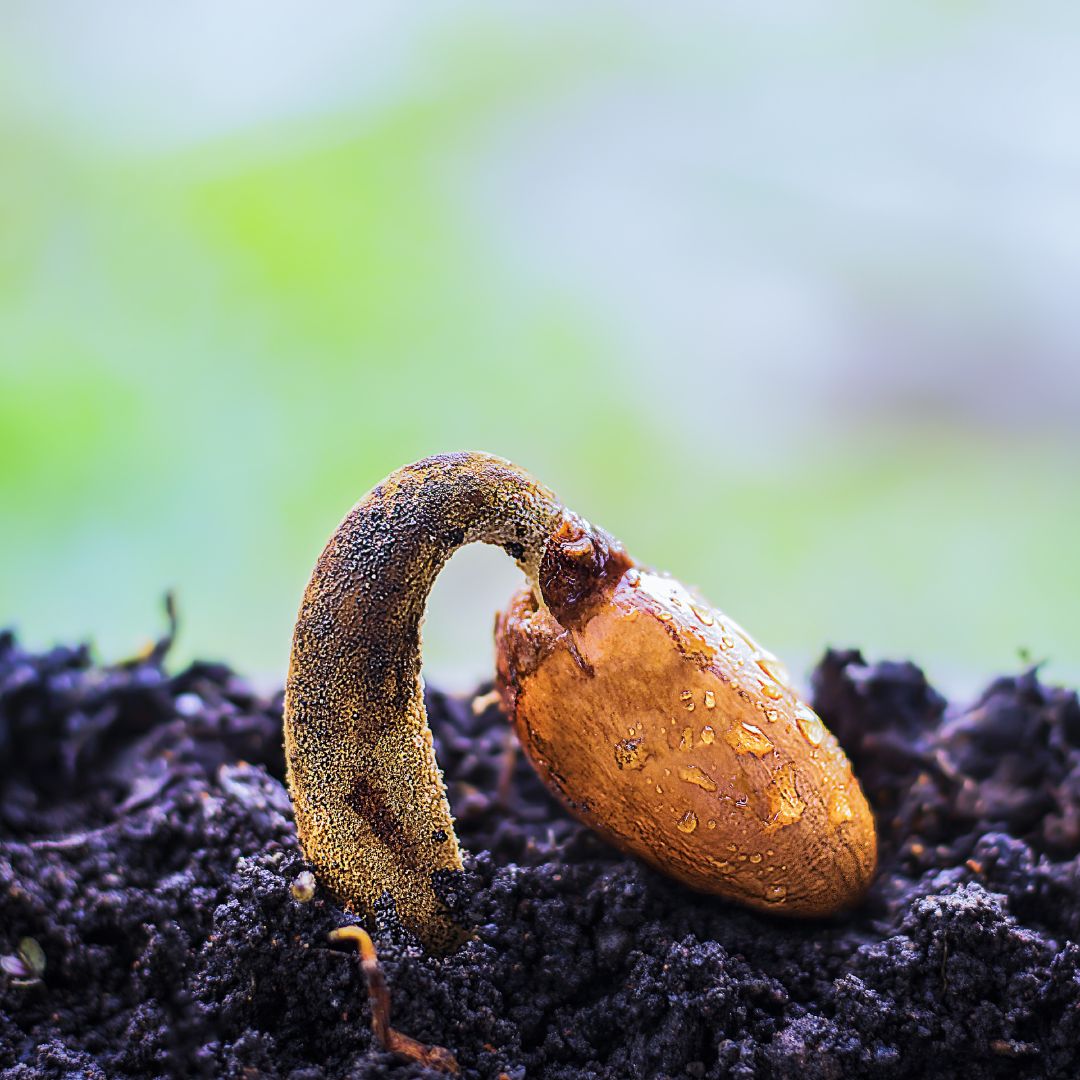
Durian (King of Fruit)
Durio zibethinus
Durian (King of Fruit)
Durio zibethinus
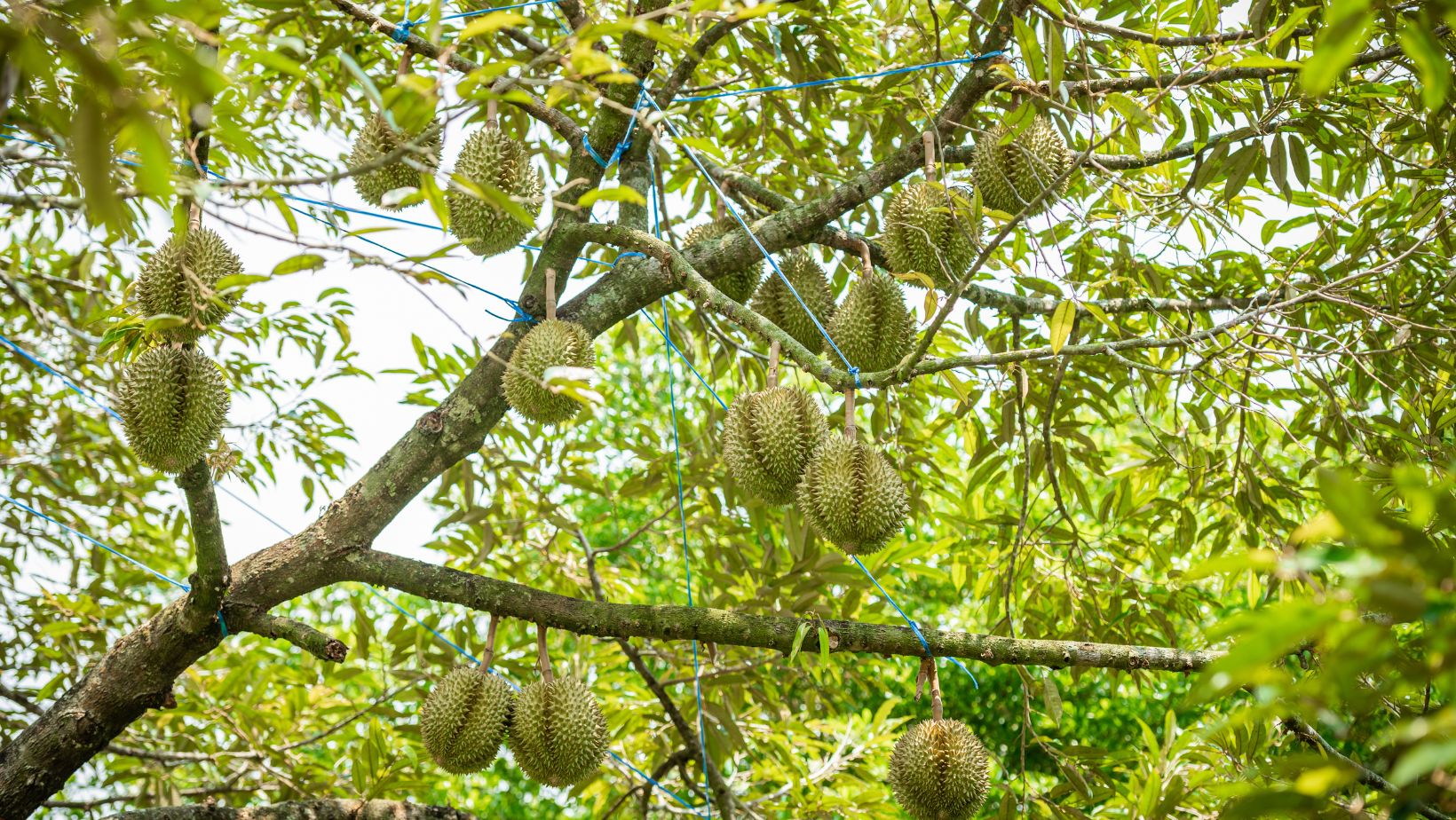
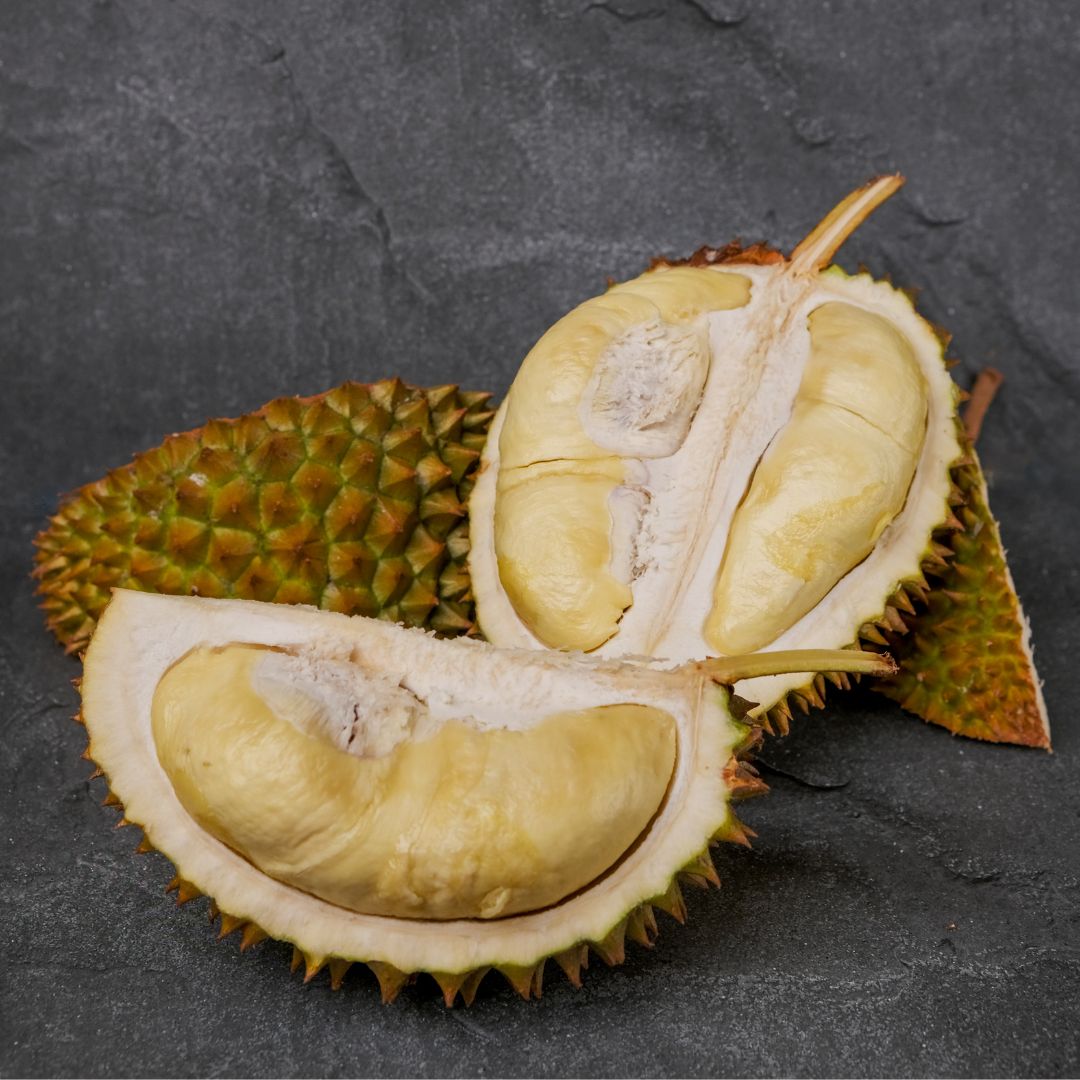
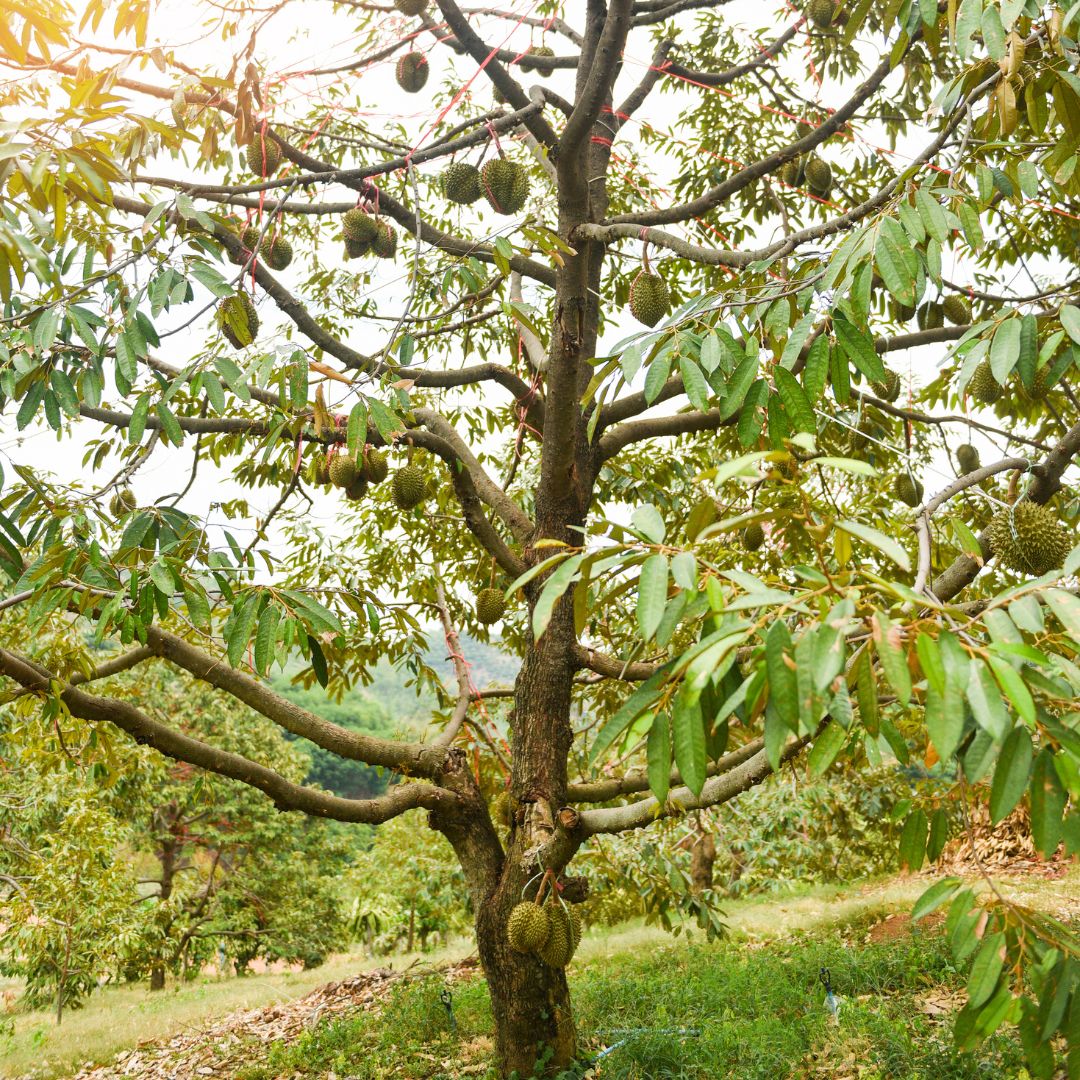
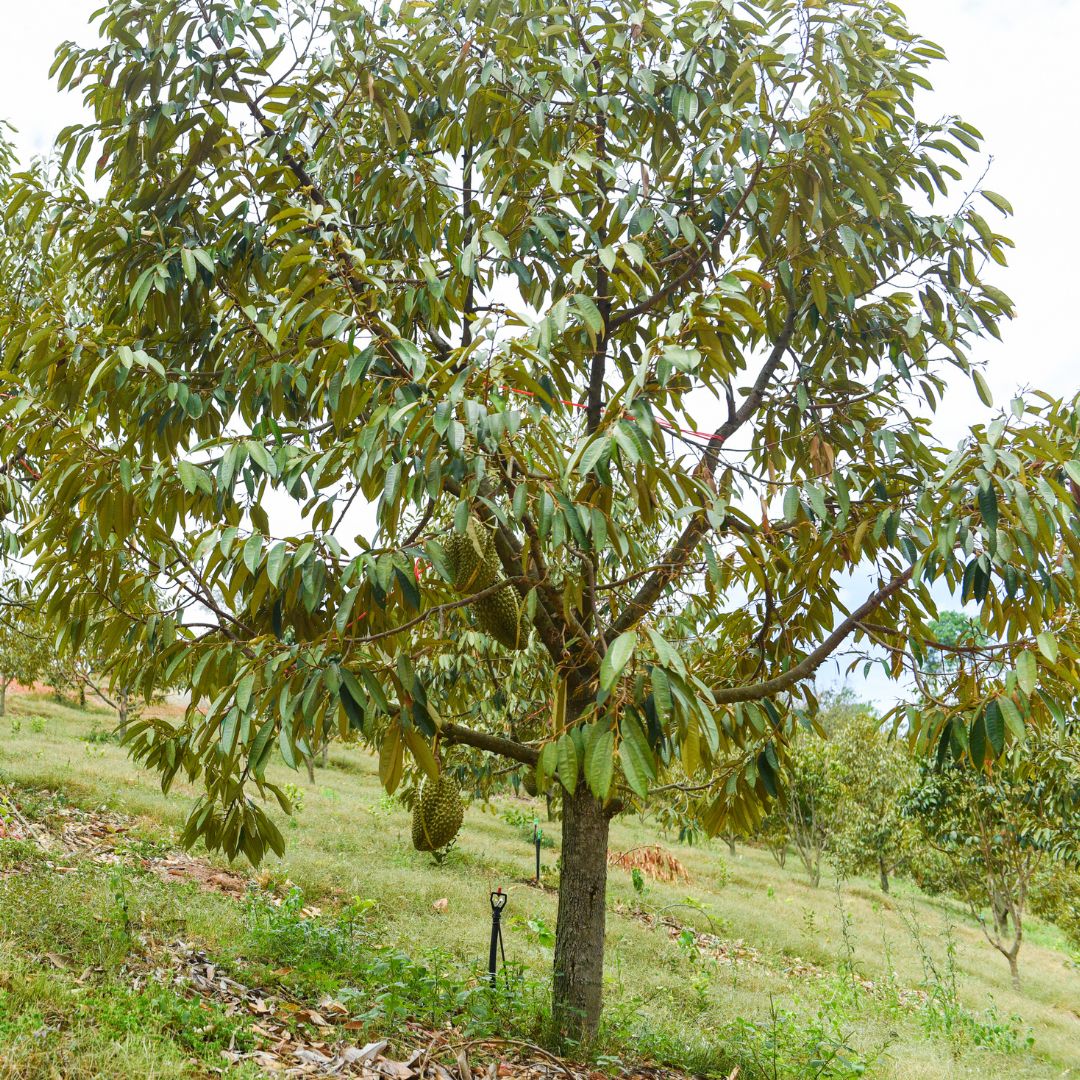
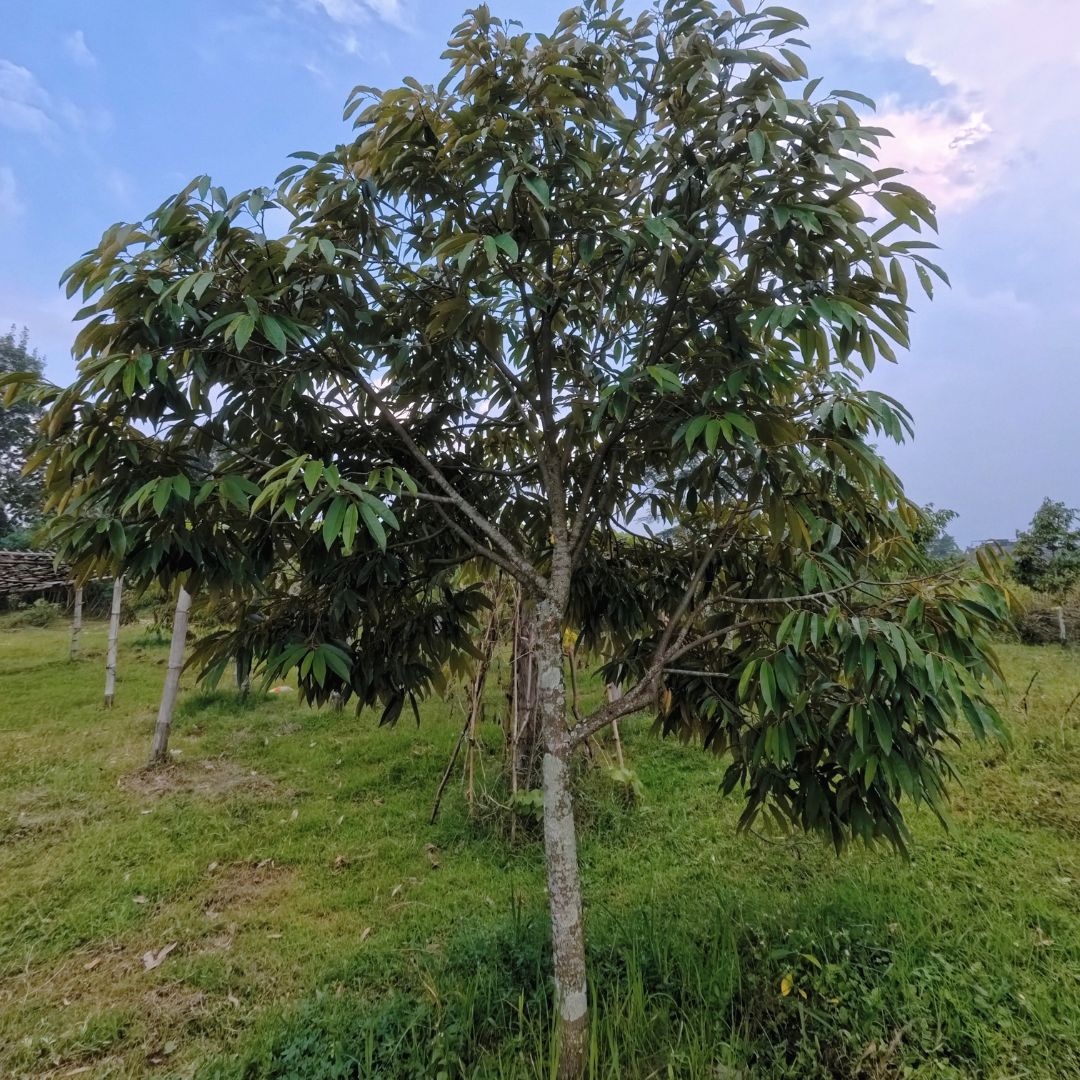
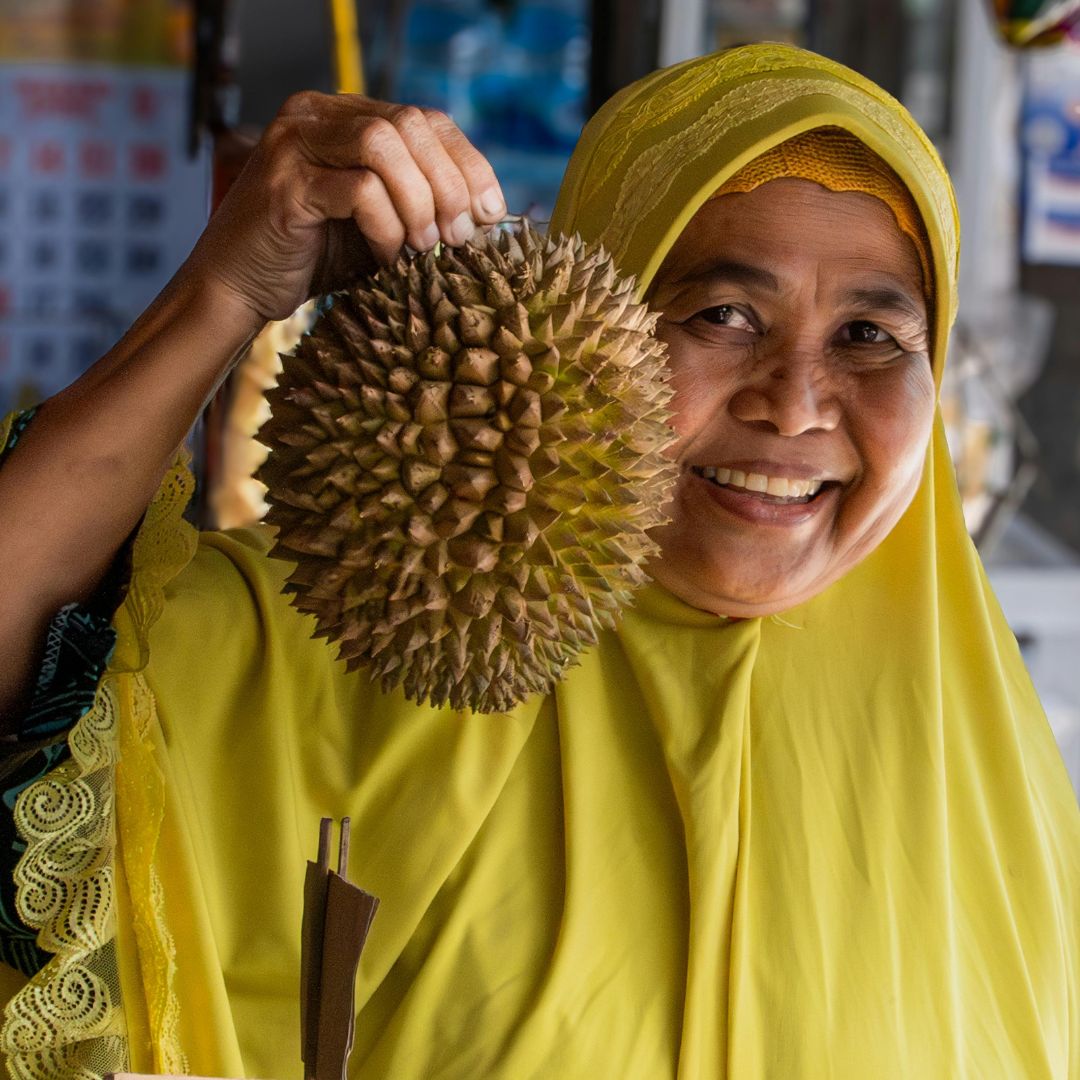
The Durian tree is an iconic tropical fruit tree, widely celebrated as the King of Fruit. It is a large, majestic tree known for its massive canopy and sharp, thorn-covered fruits that possess a powerful aroma and a rich, custard-like flavor. Beyond its immense economic value, the tree plays a vital role in tropical ecosystems as a carbon sink and a critical food source for forest wildlife.
Environmental Impact
- ✔ Biodiversity Support, ✔ Carbon Sequestration, ✔ Shading, ✔Soil Conservation
Tree Usage
- Economic, Food, Medicinal
Durio zibethinus
Durian
Duren (Javanese), Kaduh (Sundanese), Tuat (Dayak)
Malvaceae (formerly Bombacaceae)
Not Evaluated
High; as a long-lived hardwood tree with a wide crown, the durian tree stores significant amounts of carbon within its massive trunk and branch structure.
Southeast Asia (Indonesia, Malaysia, and Brunei).
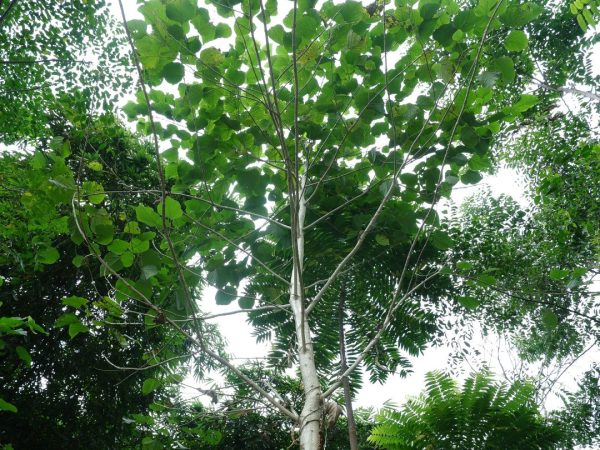
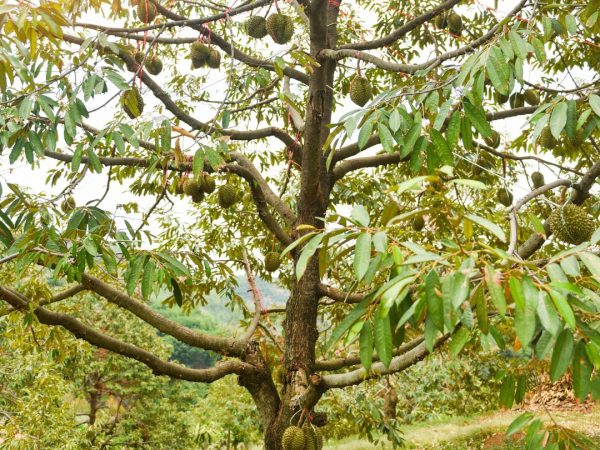
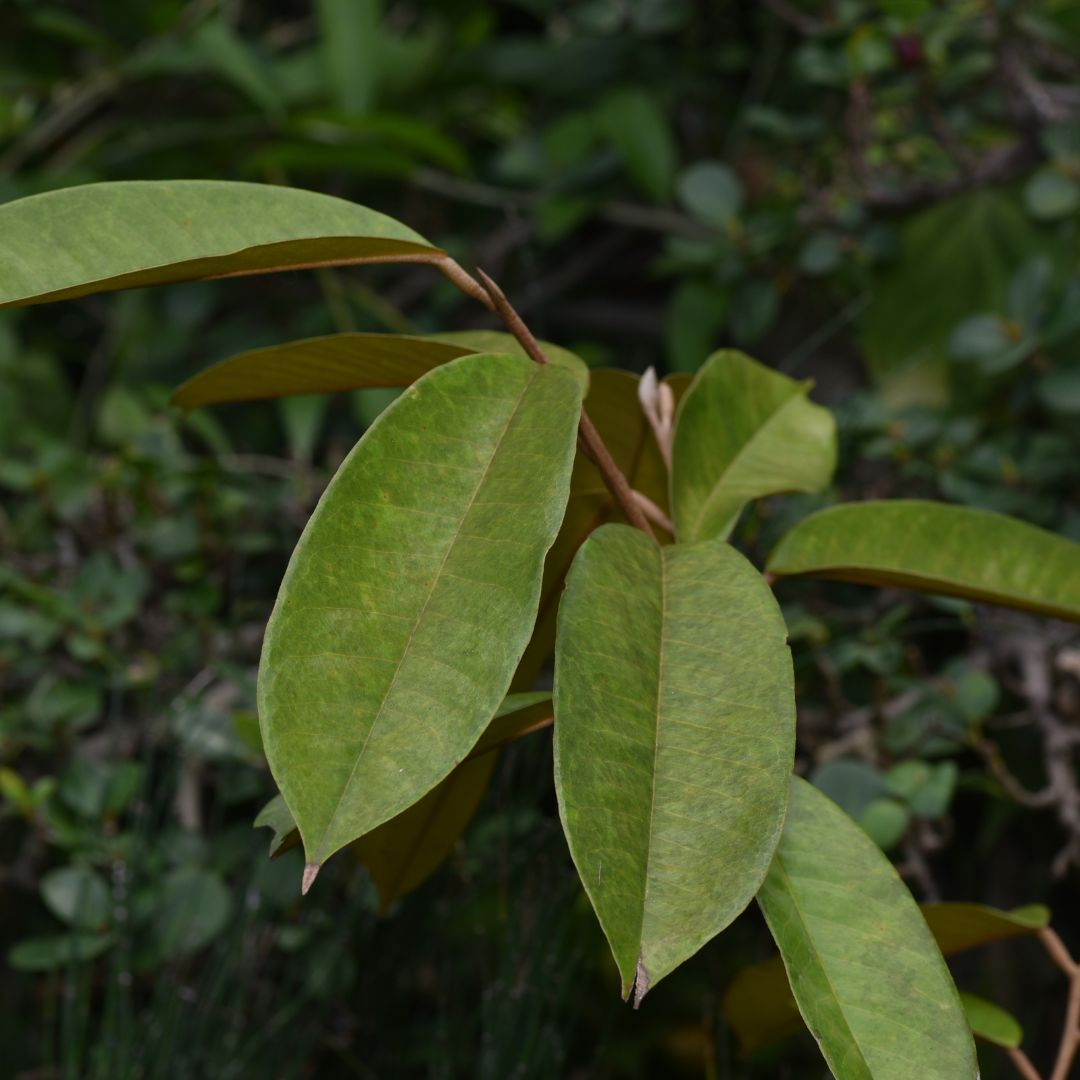
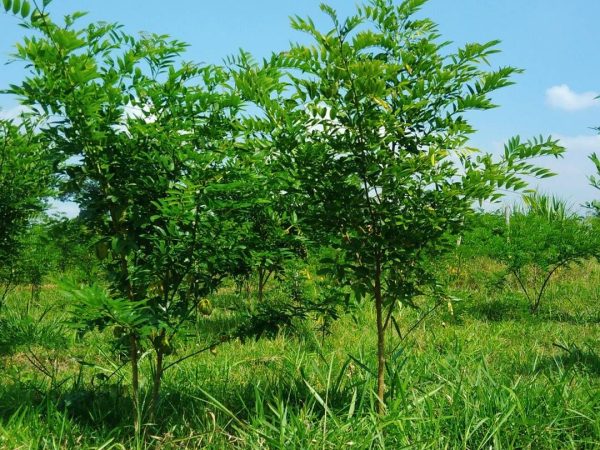
A large tree that can reach heights of 25–40 meters. The leaves are elliptical with a glossy green upper surface and a golden or silver scaly underside. The fruit is famous for its thick rind covered in sharp spines.
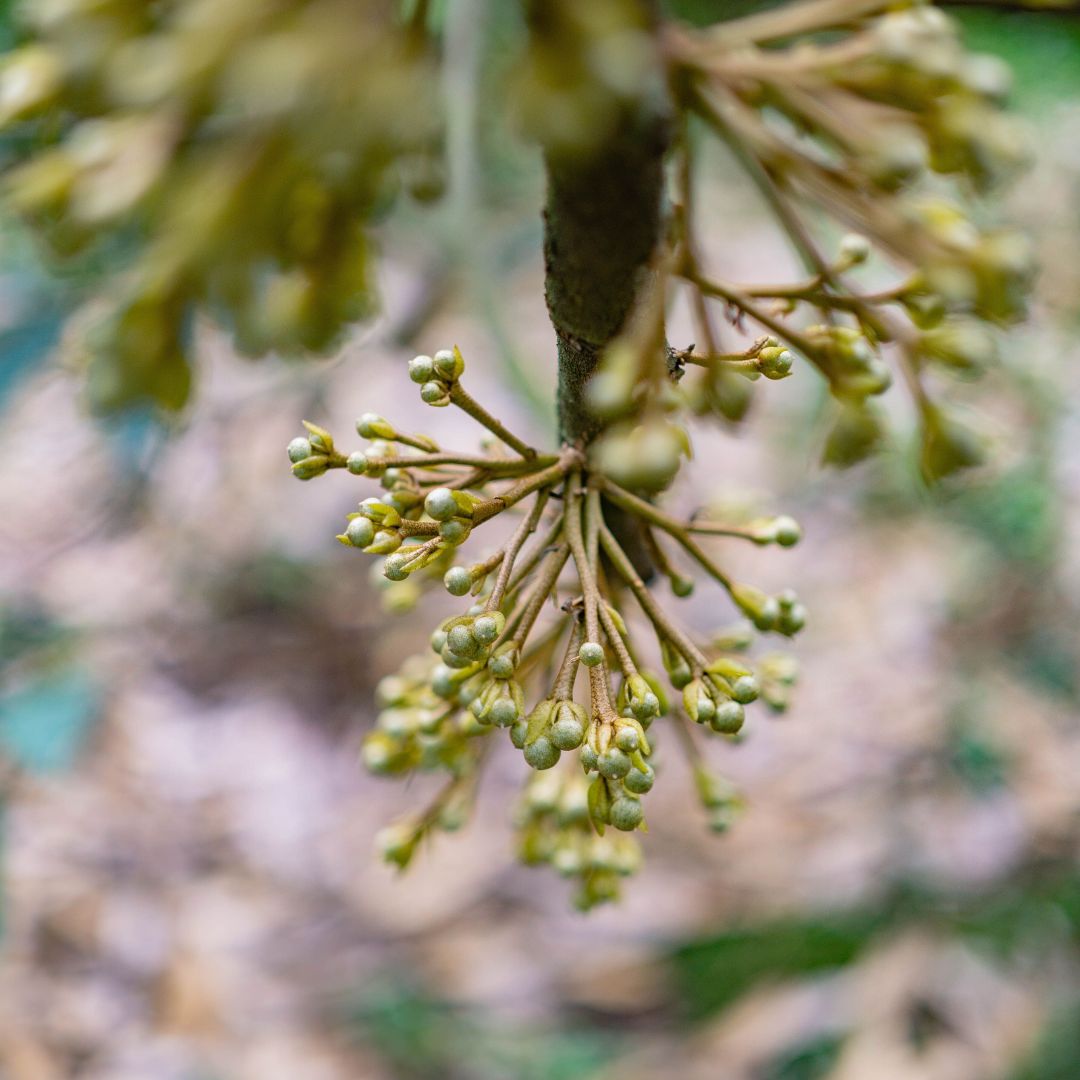
Lowland tropics up to an altitude of 800 meters above sea level. It requires high, well-distributed rainfall but needs a short dry spell to stimulate flowering.

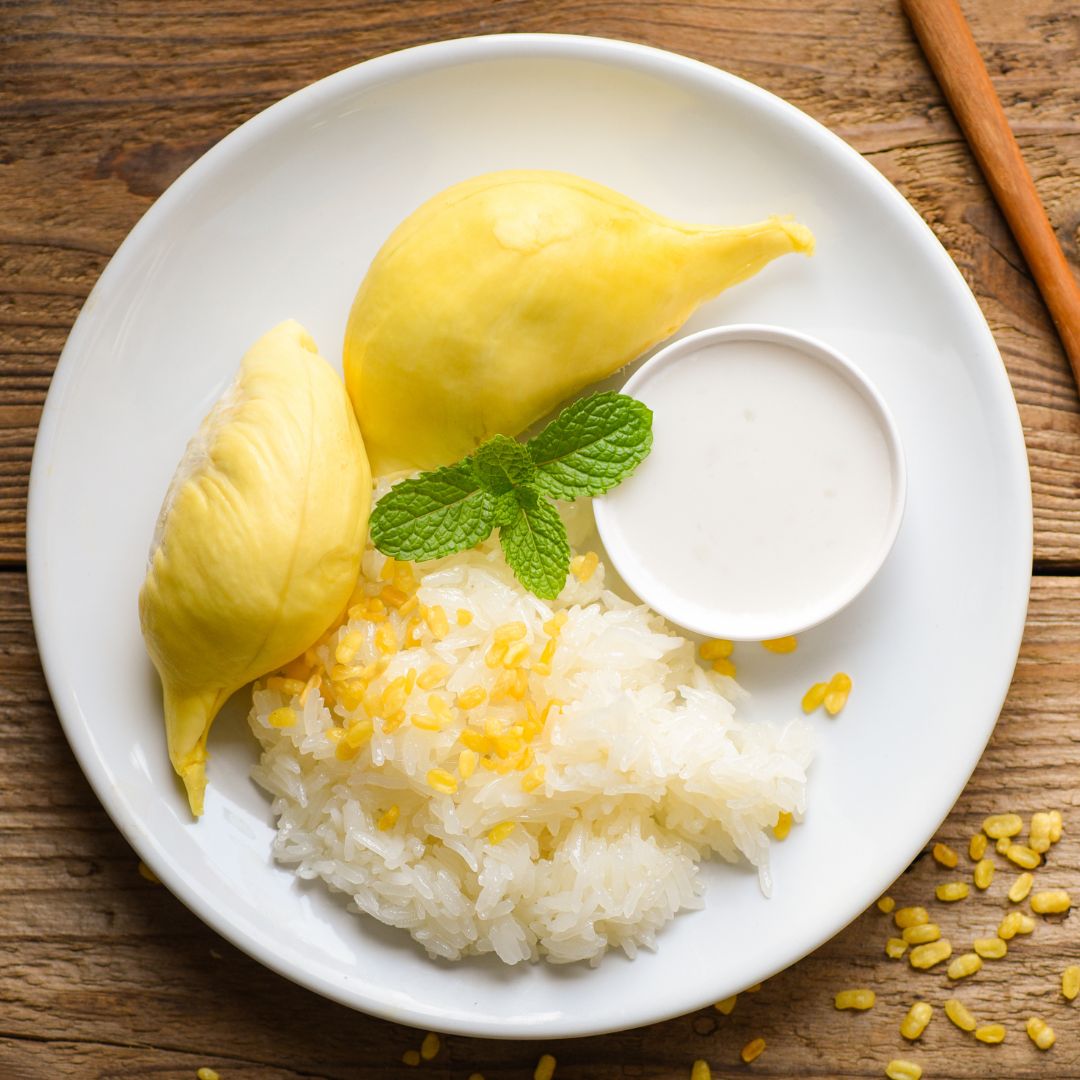
The primary product is the fruit, which holds very high market value. In addition to being eaten fresh, it is processed into lempok (fruit leather), tempoyak (fermented durian), and flavorings for cakes and ice cream. The seeds can also be boiled or roasted and eaten as a starch source.
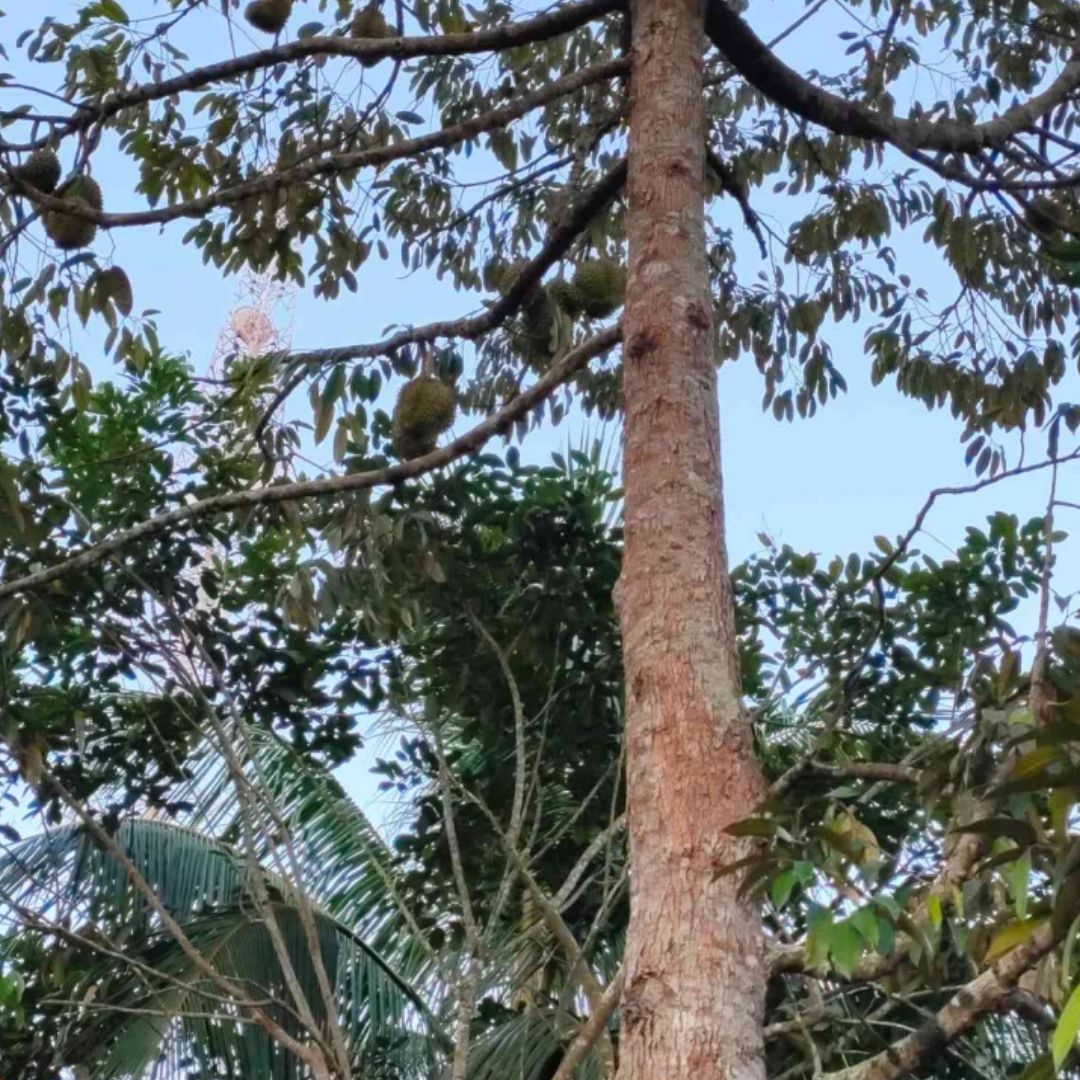
Durian wood is classified as a light hardwood. It is commonly used for interior house construction, low-cost furniture, and packing crates because it is easy to saw and work with.
Traditionally, a decoction of durian roots has been used to treat lingering fevers, while the leaves are sometimes used in medicinal baths for patients with jaundice in various Southeast Asian cultures.
- Durian is one of the few fruits that rely almost exclusively on bats and large moths for pollination.
- The famous naturalist Alfred Russel Wallace described the flavor of durian as a rich butter-like custard highly flavoured with almonds.
- There are over 30 species of Durio in the world, but Durio zibethinus is the only one traded globally on a large scale.
- Indonesia is home to unique premium varieties, such as the Rainbow Durian from Papua, the Red Durian from Banyuwangi, and the Bawor Durian from Banyumas, which is famous for its thick flesh and large size.
- In Sumatra and Kalimantan, excess durian is traditionally preserved as Tempoyak (fermented durian paste), which is used as a savory condiment or cooked with fish, showcasing ancient local food preservation wisdom.
Discover More Trees
See Your Trees-win
| Enter Your WIN |
Renewing the environment and empowering the local communities through the forestry and education
Visit Your Trees-text
| Enter Your WIN |
Renewing the environment and empowering the local communities through the forestry and education