
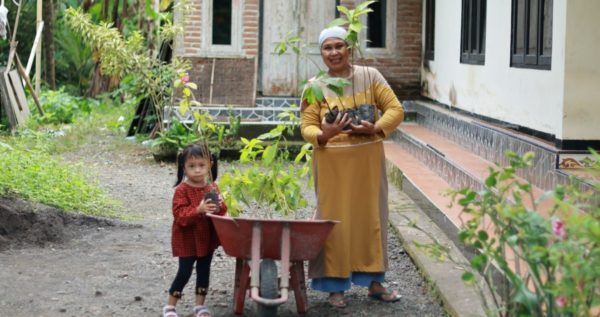
Located within two of critical Bali’s watersheds, Sangianggede and Tukad Melaya, Tuwed Village in Melaya District, Jembrana Regency is strong for its agricultural tradition closely tied to local culture. Many residents rely on farming for their livelihoods, cultivating trees and crops, such as paddy, coconut, cacao, and various vegetables.
However, like many parts of Bali, this area is increasingly facing pressure from rapid human-driven development, transforming much land into residential and commercial areas, creating challenges for farming communities. Amid these changes, some villagers remain committed to preserving their agricultural traditions. Among them are Nurhayati and Sahliah, two women farmers who continue to cultivate the land while contributing to their families and communities.
Breaking Village Tradition: Women as Farmers
In Tuwed Village, farming is seen as men’s work as it requires much physical labor. Most women in the village are housewives, while some earn income by collecting coconut leaves. Only a few women choose to work directly in agriculture.
Sahliah and Nurhayati are among the women who have broken this tradition by dedicating themselves to farming.
“It’s rare to find women in Tuwed who farm as their main routine. Usually, women only help during harvest time,” said Nurhayati, one of the village’s woman farmers.
Now in her forties, Nurhayati has been familiar with farming since her early marriage. “My husband is a farmer, so I have worked alongside him in the field since we got married,” she explained.

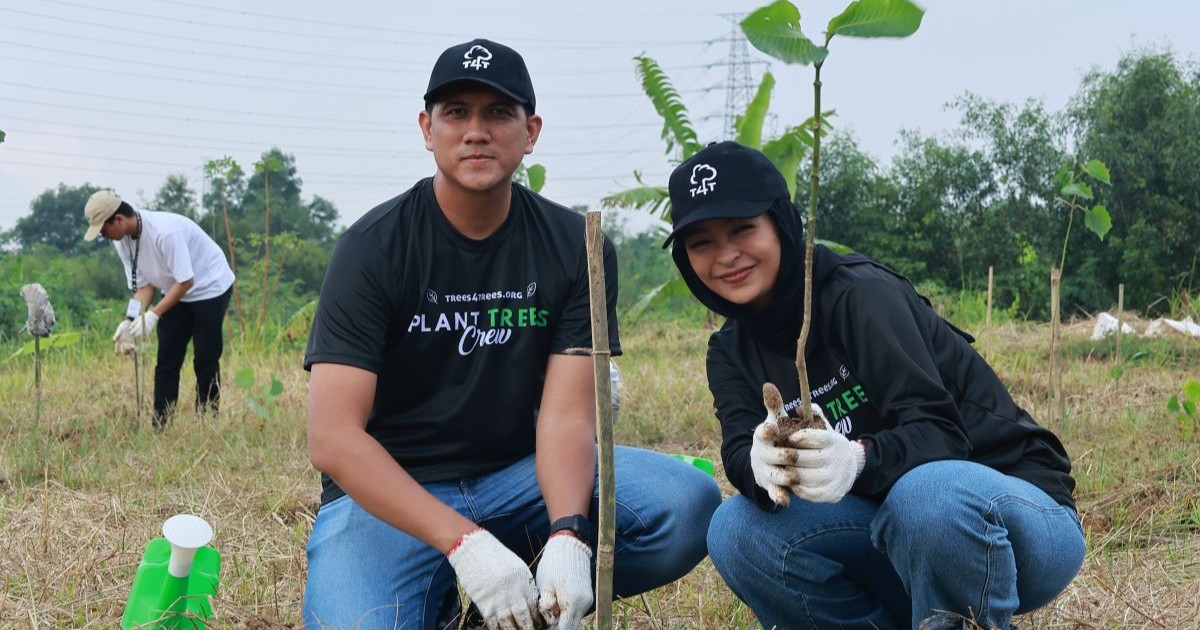
Together with her husband, Nurhayati manages a rice field and several plots of land where they grow corn, bananas, and vegetables. “After years of farming, I have seen how it can support my family’s needs,” she said. In 2024, they joined the Trees4Trees program receiving albizia, avocado, and cacao trees. “I hope these trees will become our savings for the future,” added Nurhayati.
Another woman farmer, Sahliah, described farming as her side job, while her husband works as a full-time farmer managing rice fields and land planted with coconut trees and crops. Even so, Sahliah actively ensures their crops and coconut trees grow well and thrive.
Like Nurhayati, Sahliah also received albizia, avocado, and cacao seedlings from a tree-planting program initiated by Faithfull in partnership with Trees4Trees in 2024. “These trees are investments for the future. When I get older and am not strong enough to work, I can harvest the fruits along with crops we planted to support our needs,” she said.

Independent and Self-sufficient Women
Behind their persistence in farming lies a larger goal: becoming financially independence women who can contribute to their family.
In addition to farming, Sahliah started a small business five years ago related to trees she grows: collecting young coconut leaves. The demand for young coconut leaves in Bali remains high because they are widely used in traditional ceremonies and rituals. The leaves are crafted into penjor, tall decorative bamboo poles adorned with young coconut leaves (janur), and banten, traditional Balinese Hindu offerings.
“This business employs around 15 women who work with me to collect young coconut leaves, pack them, and send them to crafters in Denpasar,” Sahliah said. She emphasized that maintaining healthy coconut trees she has grown and continuing farming are essential to sustaining her business, as the quality of the leaves depends on the health of the trees and the ecosystem.
“Through this business, I want more women in this village to work and earn their own income, instead of depending on their husband entirely to support their family needs,” she added. Sahliah believes that productive women can strengthen household financial stability.
Nurhayati also pursues her own source of income. Besides farming with her husband, she runs a small snack stall in front of her house. The income she earns from selling harvests helps her add capital to her stall and create additional opportunities to support her family. “It is always satisfying to earn my own income without depending on my husband,” she said.

Farming for the Future
For both Nurhayati and Sahliah, their commitment to farming and planting trees goes far beyond generating income. Their village has experienced environmental challenges, including drought during the dry season and flooding during the rainy season. For them, planting trees is also a way to help restore their village’s surrounding environment.
“I love seeing the area around my land becoming greener. It feels cooler and makes me feel safer with more trees around,” Sahliah said.
Through the tree-planting program initiated by Faithfull in collaboration with Trees4Trees this season, the trees planted are expected to bring long-term benefits, not only restoring the environment but also strengthening the livelihoods of local communities, especially empowering women like Sahliah and Nurhayati.
Writer: V. Arnila Wulandani. Photos: Y. Dessenita