Medani Village in Pati Regency, Central Java, is home to communities whose livelihoods depend heavily on the land. Coffee, cloves, rice, and cassava are among their main commodities and key sources of income. With agriculture playing a central role in daily life, women’s participation in farming is remarkably high. Many are involved in every stage of cultivation.
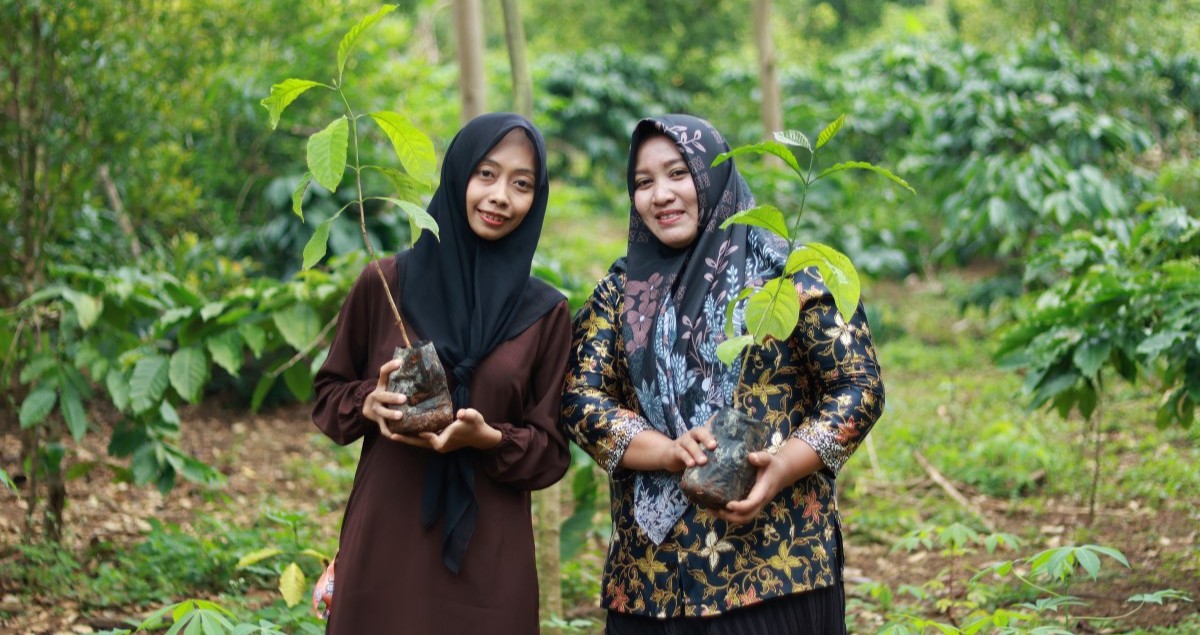
“Most housewives usually help our husbands manage the farmland, so we can contribute to improving our family’s income,” said Susanti, one of Medani Village’s women farmers and a Trees4Trees farmer partner.
Together with their husbands, these women work hard to build decent livelihoods through farming while keeping alive the agricultural traditions passed down through generations in their community.
Women’s Participation in Farming
Umi, another woman farmer in Medani Village who is also a Trees4Trees farmer partner and community facilitator, began farming in childhood. Her father was the one who first taught her how to cultivate the land.
“I once moved to another city to work while studying. But when I realized the income I earned there was barely enough, I decided to return home after getting married and focus on farming with my husband,” she shared. Today, Umi and her husband are able to provide a life for their family through coffee cultivation. She is also supported by a community of fellow women farmers.
“In Medani Village, it’s not only the men who farm, the women do too. Many of our husbands also work as stonemasons or laborers to keep the household income stable, so as women, we naturally step up to take care of the farming ourselves,” she added.
Susanti shares a similar story. Coming from a farming family, she focused on agriculture after marriage. “Usually, I handle the watering, fertilizing or harvesting, while my husband takes on the heavier work,” she said. When her husband has other work, she manages the land entirely on her own.
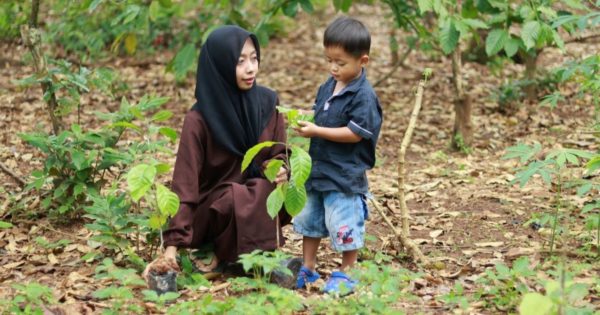
Women’s strong role in farming is also reflected in the Trees4Trees program. “In the area I manage, 70% of Trees4Trees farmer partners are women, so women’s participation in farming in this area is truly high,” Umi revealed.
Strengthening Local Income and Restoring Environment
Women’s participation not only supports family finances but also strengthens Medani Village’s local economy. As the area is well-known for producing coffee and cloves, their presence helps sustain and enhance this production.
“Our main commodity is robusta coffee with extraordinary bean quality. We only pick the red ones to keep the quality and competitive price,” said Umi. Cloves are another important source of income. “The price of cloves is also competitive, that’s why, besides coffee, I also rely on cloves,” Susanti said.
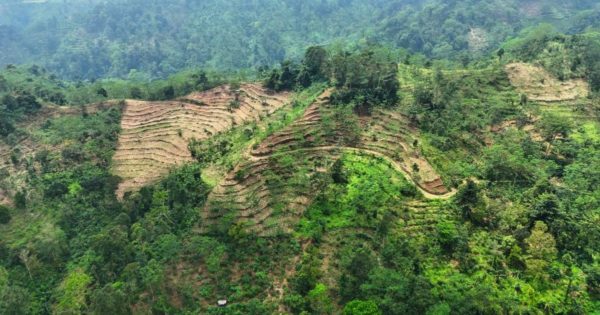
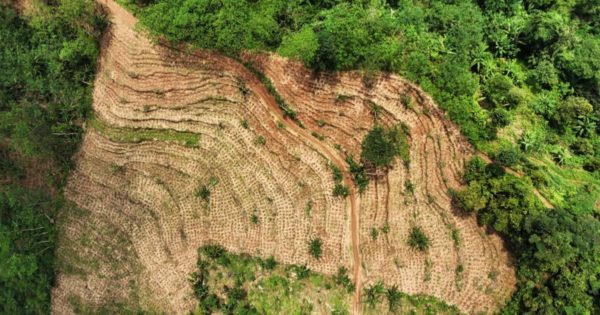
Despite these promising results, farming practices in Medani Village face serious challenges. The village lies across rocky hills and steep slopes, making the land increasingly fragile and prone to erosion and landslides. “The worst landslides usually happen during heavy rainfall. Sometimes the roads are completely blocked, making it difficult for us to reach our farmland,” Umi explained.
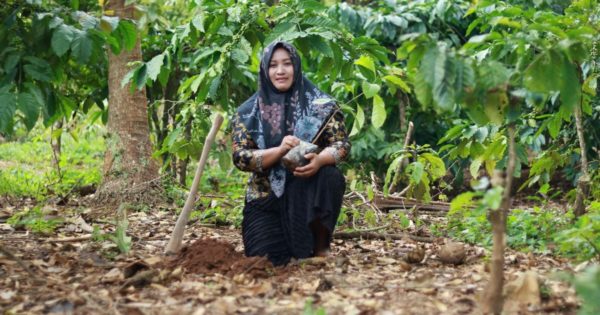
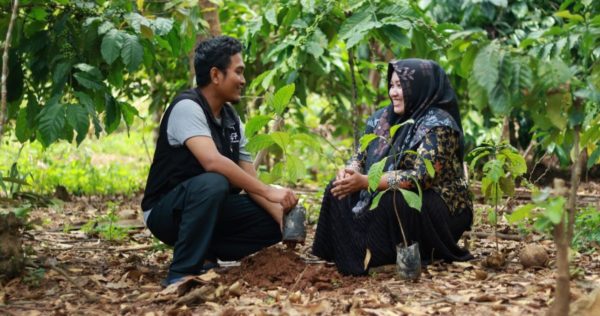
For Umi and other women, planting trees is a key solution, making the women farmers’ role has become increasingly important in environmental restoration. “This is why we plant trees alongside our crops. We need more trees on the slopes, especially where tree cover is limited, to help reduce the risk of landslides,” she added.
Tree Planting Support
To support local communities in Pati Regency, including Medani Village, Piyama, a clothing brand, together with Trees4Trees, has planted over 30,000 trees. Besides supporting local livelihoods and empowering women, this initiative also aims to restore the environment by increasing tree cover to reduce severe erosion and destructive landslides.
“One of the reasons, this is caused by agricultural land management practices by local communities that do not adequately apply conservation techniques, like applying terracing,” Khoirum Minan, Trees4Trees Project Manager said. He added, this makes tree planting especially urgent in these sloped areas.
“Trees we received really support and helped our family’s economy as well as for our surrounding environment. Thank you for the free seedlings provided, especially for farmers in Medani Village,” Ummi said.
Beyond Pati Regency, Piyama and Trees4Trees have also carried out tree-planting initiatives in Boyolali and Kebumen – Central Java, focusing on combating drought and water scarcity. In total over 80,000 trees have been planted by involving more than 880 local farmers which not only restores the environment but also but also supports communities and empowers women in farming.
Writer: V. Arnila Wulandani. Photos: Y. Dessenita