Restoring Gunung Putri Industrial Area
Restoring Gunung Putri Industrial Area in Bogor Through Urban Forestry
Trees planted
Families helped
Total areas reforested
CO2 captured
Project started
Planting methods
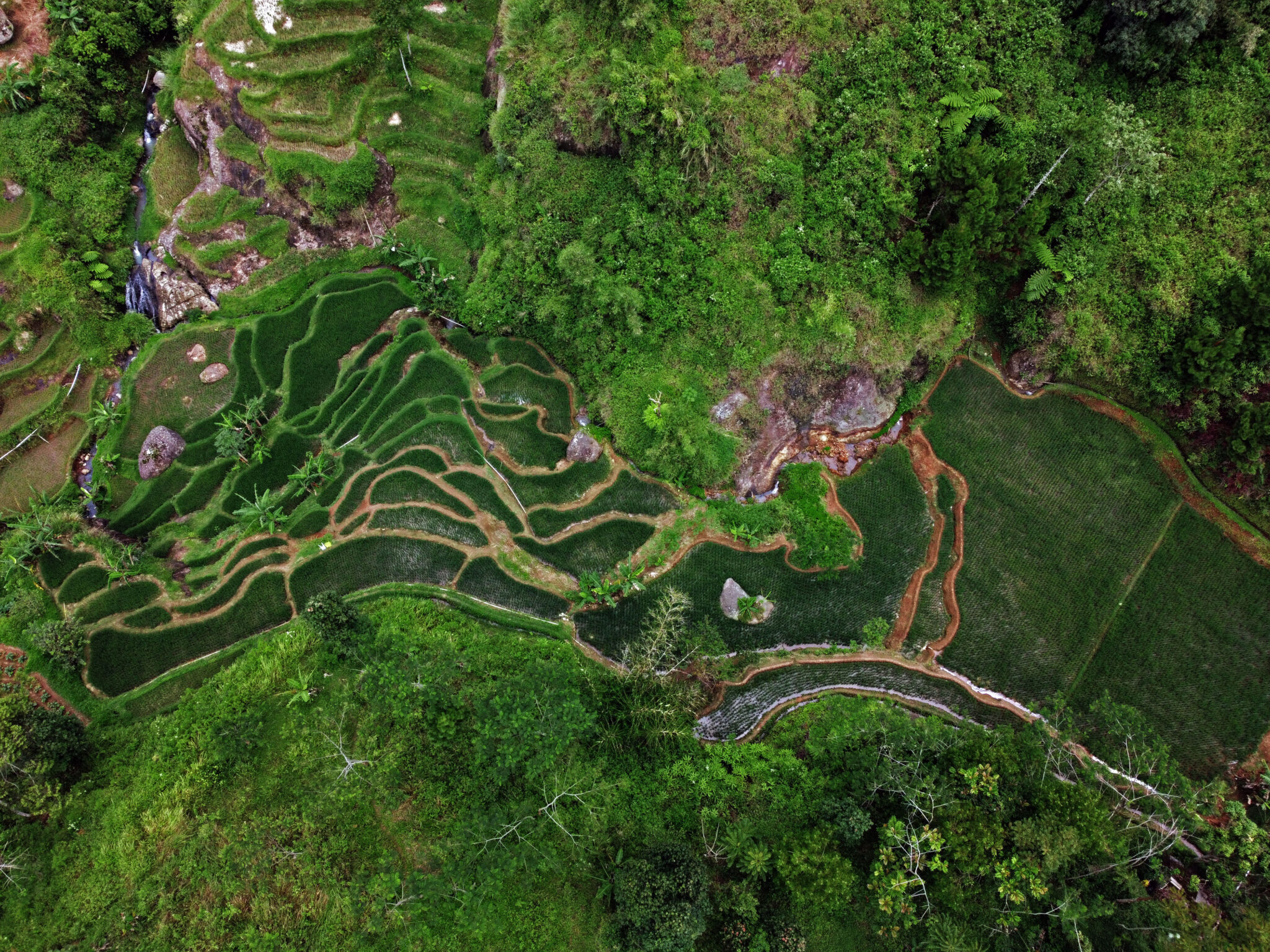
Rapid industrial development, land-use changes, infrastructure development, and encroachment in Gunung Putri, Bogor, West Java have triggered severe land degradation, leading to critical soil depletion, severe river siltation, and extreme vulnerability to seasonal floods and droughts. In response to these urgent environmental pressures, the project successfully established crucial green open spaces (Ruang Terbuka Hijau) by planting 12,007 community-selected trees. Conducted in early 2024, this ecological initiative is strategically designed to optimize natural urban cooling, control stormwater runoff, and sequester an estimated of 3,155.44 tons of CO2 over the trees’ lifespan directly supporting Indonesia’s national climate commitments and spatial planning regulations.
Location :
Total area degraded :
Cause of degradation :
Potential area for planting :
Planting density :
Severe River Pollution
Severe river pollution and siltation of industrial and domestic waste causes river siltation, critical upstream degradation, and severe ecosystem damage.
Increasing Climate Vulnerability
Extreme climate vulnerability heightened risks of erosion, frequent floods, and water scarcity or droughts during prolonged dry seasons.
This urban forestry initiative directly strengthens local economies by employing 131 personnel, including 102 dedicated nursery workers and 10 contract workers as tree planters.
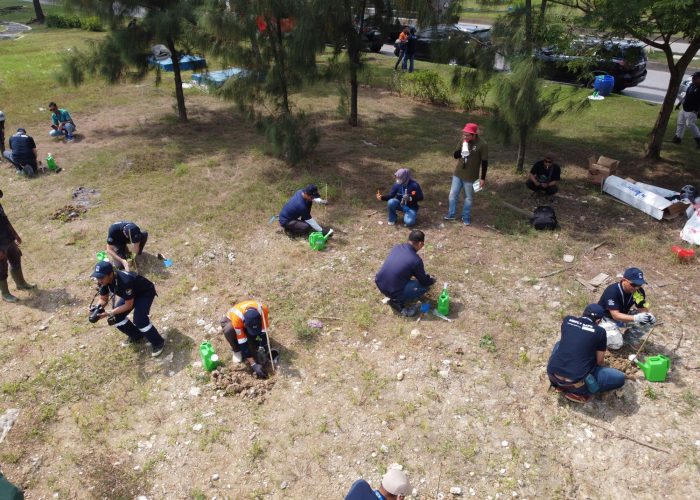
The project actively engages 205 adult volunteers, bringing together 111 public cemetery officers, 27 school employees, and 64 local community members to build a shared sense of ownership through tree-planting.
Why Support This Project
- Strengthens urban climate resilience by restoring green spaces that help regulate temperatures, reduce stormwater runoff, protect soil from erosion, and improve the capacity of urban landscapes to cope with floods and droughts.
- Supports biodiversity in a highly developed landscape by increasing tree cover and restoring green spaces that provide habitat, food, and refuge for birds, mammals, insects, and other wildlife, including native tree species such as Ficus benjamina, Falcataria moluccana, and Alstonia scholaris.
- Improves environmental quality for local communities by creating greener and more livable spaces while helping address soil degradation, river siltation, and the environmental pressures associated with rapid industrial and urban development.
- Creates local employment and strengthens community participation through green jobs and tree-planting activities, engaging nursery workers, planters, public cemetery officers, school employees, and local residents in urban forest restoration.
Related Stories
With their office based in Jakarta, where traffic and air
Gunung Putri District is located near Bantar Gebang, home to
In terms of urban area, Jakarta is the second biggest
See Your Trees-win
| Enter Your WIN |
Renewing the environment and empowering the local communities through the forestry and education
Visit Your Trees-text
| Enter Your WIN |
Renewing the environment and empowering the local communities through the forestry and education