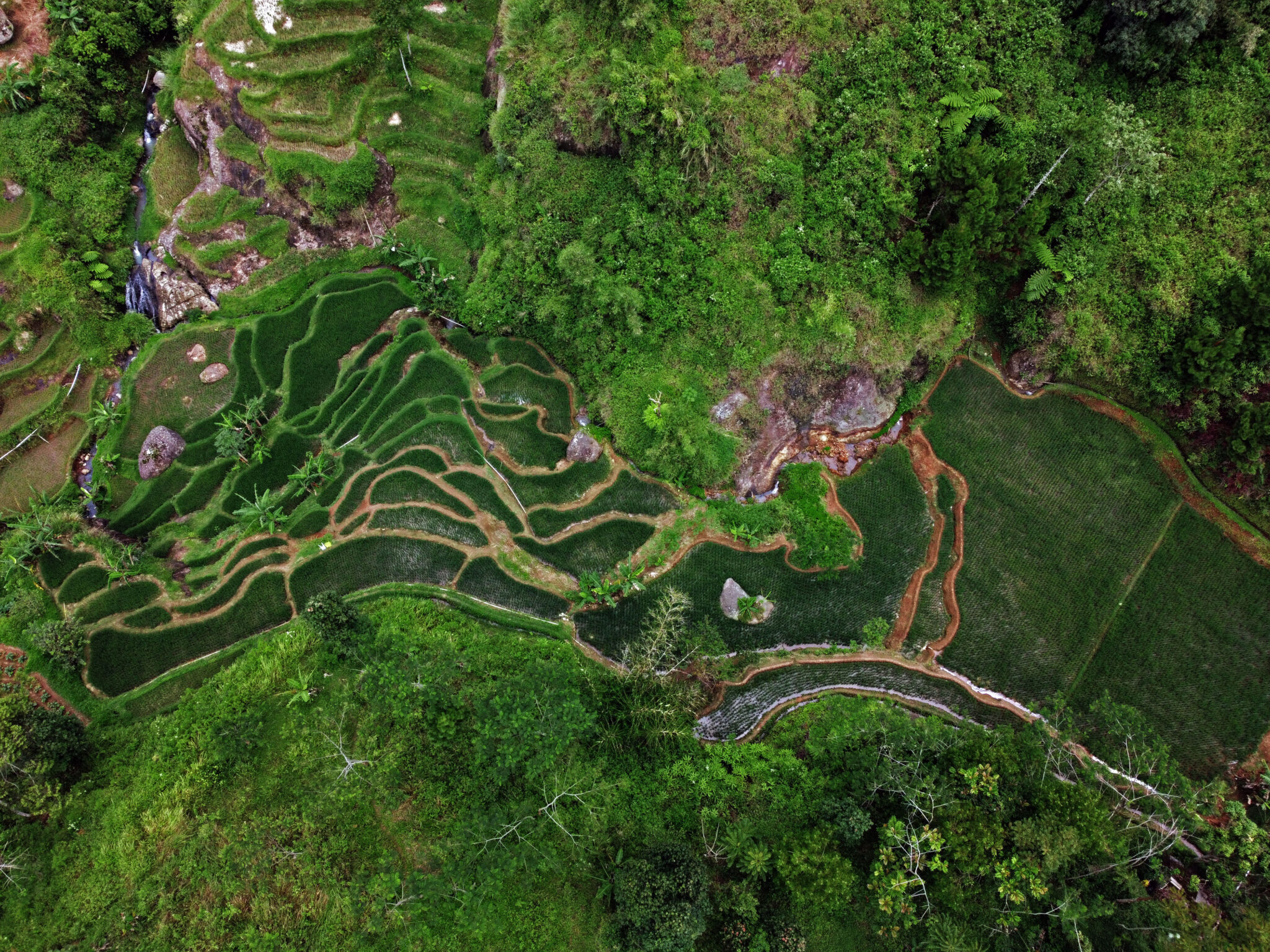
Planting Slopes of Citarum Sub-watersheds
Restoring Sloping Lands in the Upper Citarum Watershed Tributaties
Trees planted
Families helped
Total areas reforested
CO2 captured
Project started
Planting methods
Location :
Total area degraded :
Cause of degradation :
Potential area for planting :
Planting density :
The project provides direct benefits through the employment of 167 people as employees while also strengthening the knowledge and skills of landowners and workers through education and tree-planting training. Ecological indirect benefits include reduced soil erosion by minimizing agricultural runoff and preventing the loss of fertile topsoil, contributing to improved land productivity and long-term environmental sustainability.
Javan Hawk-eagle, black-crowned night heron, Sunda pangolin (trenggiling), Sunda slow loris, Javan gibbon.

The upper Citarum landscape connects diverse natural and agricultural areas across district of Pangalengan, Arjasari, Cicalengka, and Ciparay in Bandung regency. Pangalengan’s mountain landscapes, tea plantations, and natural attractions provide opportunities for nature-based tourism, while the surrounding forests and watershed ecosystems support important biodiversity and water resources.
Restoring tree cover across these landscapes can strengthen ecological connectivity, protect water sources, and help preserve the natural and cultural value of the region.
- Increasing productivity on 25 hectares of steep mountainous terrain to prevent erosion and landslides.
- The CO2 equivalent absorption of the trees’ lifetimes is 12,182 tons. This represents the total amount of CO2 that the trees planted in this project will absorb from the atmosphere during their lifetime. These values are calculated based on the anticipated biomass that the trees will reach at maturity, considering their individual species, and subsequently extracting the carbon component of that biomass.
Why Support This Project
- Reduces erosion and landslide risks by restoring tree covers on steep and degraded slopes, helping stabilize soil, reduce agricultural runoff, and prevent the loss of fertile topsoil during heavy rainfall.
- Protects watershed functions and water resources by improving water infiltration and retention across the upper Citarum landscape, helping reduce surface runoff and supporting healthier tributaries and downstream ecosystems.
- Helps restore biodiversity and ecological connectivity across the upper Citarum landscape by increasing tree cover between forests, agricultural areas, and watershed ecosystems, creating habitat and refuge for species such as the Javan hawk-eagle, Sunda pangolin, Sunda slow loris, and Javan gibbon.
Related Stories
Indonesia, the world’s largest archipelago, is rich in cultural heritage
Most people living upstream of the Citarum watershed, which spans
One of our main tree-planting locations in West Java is
The Citarum River Basin in West Java, one of Trees4Trees’
Farming is therapy for me when I am alone,” explains
At 37 years old, Itang Zaenal stands out as a
See Your Trees-win
| Enter Your WIN |
Renewing the environment and empowering the local communities through the forestry and education
Visit Your Trees-text
| Enter Your WIN |
Renewing the environment and empowering the local communities through the forestry and education